What Are the 2026 Top DC Molded Case Circuit Breakers?

The 2026 market for dc molded case circuit breaker technology is becoming more demanding. Data centers, battery storage systems, solar plants, and electric transport require dependable DC protection. These applications expose breakers to persistent fault currents, limited current zero crossings, and difficult arc extinction conditions.

MarketsandMarkets estimates that the global circuit breaker market could grow from approximately USD 7.4 billion in 2023 to USD 10.1 billion by 2028. Grand View Research also forecasts continued expansion through 2030, although its market scope differs. Those figures provide useful context, not a perfect DC-specific answer. A precise 2026 ranking remains difficult because manufacturers report product categories differently.

Jim Dollard, an electrical safety specialist and NFPA contributor, offers a practical reminder: “Safety is a process, not a product.” That principle matters when comparing a dc molded case circuit breaker. Interrupting capacity alone cannot determine the best choice. Engineers must examine voltage ratings, polarity, thermal performance, magnetic trip behavior, coordination, and enclosure conditions. IEC 60947-2 and UL 489 provide important technical reference points, but application conditions still control final selection.

The strongest 2026 candidates will combine verified interruption performance with dependable accessories, clear testing data, and service support. A breaker may look impressive on paper. Field installation can reveal weaknesses. This review therefore examines leading DC MCCB options through a practical lens, including protection performance, installation flexibility, and long-term reliability. Some conclusions remain open to revision. Better product data could change the ranking.

What Are the 2026 Top DC Molded Case Circuit Breakers?

Definition and Role of DC Molded Case Circuit Breakers

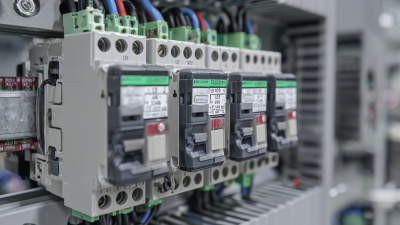
A DC molded case circuit breaker is a resettable protection device for direct-current circuits. It interrupts overloads and short circuits before excessive heat damages cables or equipment. Unlike AC, DC has no natural zero-crossing point. The breaker must control and extinguish a persistent arc inside its arc chamber. That difference shapes its construction, ratings, and installation method.

In 2026, leading DC MCCBs are designed for battery storage, solar arrays, charging equipment, and industrial control cabinets. A typical unit may protect a 48-volt battery bank or a higher-voltage photovoltaic string. Its role includes circuit protection, manual isolation, and safer maintenance access. Engineers check continuous current, maximum system voltage, interrupting capacity, pole arrangement, and polarity. They also examine ambient temperature and cable size. A 250-ampere breaker is not automatically suitable for every 250-ampere application.

Practical selection requires more than reading the front label. During commissioning, technicians should verify torque, terminal temperature, trip settings, and coordination with upstream and downstream devices. Electronic trip units can improve adjustment accuracy, while thermal-magnetic designs may offer simpler field service. A visible handle helps workers identify an open circuit quickly. Small details matter.

Field experience also reveals a common weakness: specifications are sometimes copied without checking the actual fault current. That shortcut can create false confidence. I would review the system calculation, manufacturer test data, and applicable IEC or UL requirements before approval. Installation conditions can change performance, and real cabinets are rarely as tidy as drawings suggest.

What Are the 2026 Top DC Molded Case Circuit Breakers?

A DC molded case circuit breaker (MCCB) is a resettable protective device designed to interrupt direct-current overloads and short circuits. It helps protect conductors, batteries, photovoltaic equipment, charging systems, and DC distribution panels.

The chart shows common DC system voltage classes used when selecting MCCBs. The breaker’s rated operational voltage must meet or exceed the circuit voltage, while interrupting capacity, polarity requirements, continuous current, and time-current characteristics must also be verified for the installation.

Reference framework: IEC 60947-2 low-voltage circuit-breaker requirements. Actual available ratings vary by application and installation design.

Key Specifications for Choosing a 2026 DC MCCB

What Are the 2026 Top DC Molded Case Circuit Breakers?

Choosing a top DC molded case circuit breaker starts with system voltage, not marketing language. Check the maximum continuous voltage, pole arrangement, and polarity requirements. IEC 60947-2 requires clear performance ratings for low-voltage circuit breakers. UL 489 provides another recognized reference for North American installations. These standards support safer comparisons.

Interrupting capacity is critical. A 500 VDC breaker may not safely interrupt the same fault current as a 250 VDC model. Match the breaker’s DC interrupting rating with the calculated prospective short-circuit current. Leave engineering margin. Too little margin creates risk during battery faults or photovoltaic backfeed. The IEA Electricity 2024 report also notes continued growth in electrification and renewable generation, increasing the need for dependable DC protection.

Trip behavior deserves equal attention. Select adjustable thermal-magnetic or electronic protection when load profiles vary. Compare overload, instantaneous, and short-time settings. Verify the time-current curve under actual ambient conditions. At 40°C, continuous current may require derating. Check insulation voltage, impulse withstand, mechanical endurance, terminal temperature, and enclosure compatibility. IEC 60947-2 testing provides useful benchmarks, but field installation can still differ. Cable length, ventilation, and battery chemistry matter. A technically correct selection can fail if these details are ignored. The specification sheet is not the whole installation.

What Are the 2026 Top DC Molded Case Circuit Breakers? - Key Specifications for Choosing a 2026 DC MCCB
DC MCCB Configuration Typical Application Rated Current Range (In) Typical Operating Voltage Typical DC Interrupting Capacity Number of Poles Trip Technology Protection Functions Isolation and Switching Features Applicable Standards Key Selection Advantage
Compact low-voltage DC MCCB Control panels, battery cabinets, telecom power systems, and small DC distribution boards 16–160 A 250–500 V DC Typically 10–25 kA at the declared DC voltage 2 or 3 poles Thermal-magnetic or fixed electronic trip Overload and short-circuit protection; optional undervoltage release Manual operating handle; line-load reversibility depends on the design IEC 60947-2; UL 489 where applicable Small footprint and economical protection for low-to-medium DC fault levels
Solar PV string and combiner MCCB Photovoltaic combiner boxes, DC distribution, and inverter input protection 63–400 A 600–1,000 V DC Typically 10–25 kA at the specified PV voltage 2, 3, or 4 poles Thermal-magnetic or electronic trip with adjustable long-time protection Overload, short circuit, and optional ground-fault-related system protection Suitable for polarity isolation when the complete pole arrangement is correctly applied IEC 60947-2; photovoltaic installation requirements may also involve IEC 62548 Designed for high-voltage PV circuits where DC arc interruption and pole configuration are critical
High-voltage solar and energy-storage MCCB Central inverters, battery energy-storage systems, and renewable-energy DC feeders 250–800 A 1,000–1,500 V DC Typically 15–50 kA, subject to voltage, polarity, and wiring arrangement 3 or 4 poles Electronic trip unit with adjustable long-time, short-time, and instantaneous functions Overload, short circuit, optional zone-selective interlocking, and alarm contacts May support shunt trip, undervoltage release, auxiliary contacts, and motorized operation IEC 60947-2; system-level compliance may also require IEC 62933 or applicable PV standards High voltage rating and adjustable protection for large renewable-energy DC systems
Battery energy-storage feeder MCCB Battery racks, battery containers, DC bus sections, and bidirectional converter feeders 160–1,600 A 500–1,500 V DC Typically 20–65 kA at the declared operating voltage 2, 3, or 4 poles Electronic trip with configurable time-current settings Overload, short circuit, optional ground-fault protection, event indication, and communications Remote trip, undervoltage release, auxiliary contacts, motor operator, and mechanical interlocking may be available IEC 60947-2; the complete battery system may require additional energy-storage safety standards Supports coordinated protection and remote isolation in high-energy battery installations
Industrial DC distribution MCCB Factories, process equipment, cranes, mining systems, and large industrial control networks 250–2,500 A 250–750 V DC Typically 25–100 kA at the declared voltage 2, 3, or 4 poles Electronic trip unit with adjustable protection curves Long-time, short-time, instantaneous, and optional ground-fault protection Fixed or draw-out mounting; accessory options commonly include shunt trip and undervoltage release IEC 60947-2; UL 489 for applicable North American installations High current capacity, selective coordination, and broad accessory support
Railway and traction DC MCCB Rail transit substations, auxiliary circuits, rolling-stock support equipment, and DC traction distribution 100–2,000 A 600–1,500 V DC Typically 20–80 kA, depending on the traction network and test circuit 2, 3, or 4 poles Magnetic-hydraulic or electronic trip system Short-circuit, overload, undervoltage, and system-specific protection functions High mechanical endurance, vibration-resistant construction, and remote opening options may be required IEC 60947-2; railway applications may also require IEC 62271-100 or EN 50123 series compliance Suitable for demanding DC systems with high fault energy and frequent switching requirements
Marine and mobile-equipment DC MCCB Ships, offshore equipment, electric work vehicles, and mobile power platforms 100–800 A 250–1,000 V DC Typically 10–50 kA at the specified voltage 2, 3, or 4 poles Thermal-magnetic or electronic trip Overload, short circuit, undervoltage, and optional ground-fault protection Vibration-resistant mounting, corrosion-resistant options, and remote trip accessories may be required IEC 60947-2; marine installations may also require approval under applicable marine rules Compact construction with enhanced environmental and mechanical resistance
High-performance selective DC MCCB Main incomers, bus couplers, and coordinated industrial DC switchboards 630–3,200 A 500–1,000 V DC Typically 50–100 kA at the declared voltage 3 or 4 poles Advanced electronic trip with short-time delay and zone-selective interlocking Long-time, short-time, instantaneous, ground-fault, metering, and communication functions Fixed or draw-out construction; electrically operated closing and tripping may be supported IEC 60947-2; installation and assembly requirements may also involve IEC 61439 Best suited to high-fault-current systems requiring selective coordination and system monitoring

Selection note: DC interrupting capacity is not a single universal value. It must be verified at the actual system voltage, prospective short-circuit current, time constant, polarity, number of series-connected poles, installation altitude, and conductor arrangement. Final selection should use the manufacturer’s current-voltage interrupting tables and the applicable local electrical code.

Leading 2026 DC MCCB Types and Their Applications

What Are the 2026 Top DC Molded Case Circuit Breakers?

Leading 2026 DC MCCB types reflect growing demand from solar arrays, battery storage, electric vehicles, and industrial control systems. The International Energy Agency reported more than four million public electric vehicle charging points worldwide in 2023. That expansion increases the need for reliable DC fault isolation near chargers and distribution cabinets.

Thermal-magnetic DC MCCBs remain practical for smaller photovoltaic combiner boxes and auxiliary circuits. They provide simple overload and short-circuit protection, even where maintenance resources are limited. Electronic-trip MCCBs suit energy storage and data-center applications. Their adjustable pickup settings support better coordination between feeders and upstream protection. Current-limiting types reduce let-through energy during severe faults. This matters near lithium battery racks, where available fault current can rise quickly.

Voltage selection deserves careful attention. A 500 VDC breaker cannot automatically replace a 1,000 VDC model. Polarity, arc extinction, interrupting capacity, and series connection rules must match the installation. IEC 60947-2 remains a key reference for low-voltage circuit-breaker performance.

In field commissioning, technicians often focus on rated current first. That habit can miss cable length, temperature, and battery fault-current changes.

A tidy selection table can still mislead.

Not always.

Real installations need measured data, documented coordination studies, and periodic testing.

Safety Features, Standards, and Installation Requirements

In 2026, leading DC molded case circuit breakers are judged by safety, verified performance, and installation suitability. Their ratings must match the system’s voltage, continuous current, and available short-circuit current. DC faults can sustain an arc longer than AC faults. Effective arc chutes, magnetic trip protection, and clear isolation positions are therefore essential. Some designs also provide adjustable electronic trips, shunt trips, and auxiliary contacts for remote monitoring.

Standards provide a reliable starting point. IEC 60947-2 and UL 489 may apply, depending on the project location and equipment type. Local electrical codes still control the final installation. Check the breaker’s DC polarity requirements carefully. Incorrect polarity can weaken arc interruption. Confirm creepage, clearance, enclosure rating, and temperature derating before energizing the circuit. A breaker rated for indoor use should not automatically enter a damp outdoor cabinet.

Installation quality often decides whether protection works as intended. Use conductors sized for the load and secured with the specified terminal torque. Loose connections create heat, even when the breaker appears correctly selected. Keep cable lengths practical and separate power wiring from sensitive control circuits. Lockout procedures, insulated tools, protective equipment, and documented testing should be part of the work. Field inspections frequently find missing labels or incomplete torque records. These seem minor, but they deserve correction. No breaker is perfect when selection data is incomplete or installation assumptions go unchallenged.

How to Compare and Select the Right DC MCCB for Your System

Selecting a 2026 DC molded case circuit breaker requires more than comparing current ratings. The system voltage, fault current, load type, and installation environment must match the breaker’s real operating limits. A 250 A breaker may suit a battery cabinet, yet fail to protect a motor circuit with heavy starting current. Check continuous current, interrupting capacity, and polarity requirements together.

In panel reviews, I look closely at trip behavior and adjustment range. Thermal-magnetic protection can work well for stable loads, while electronic trip units offer more precise coordination. Fast interruption matters in battery storage and solar applications. So does arc control. Ask for tested DC performance at the intended voltage, not only an AC rating. A neat datasheet can still mislead.

Temperature deserves attention. A breaker inside a sealed enclosure may carry less current than its nameplate suggests. Review derating curves, terminal temperature limits, cable size, and ventilation. Mechanical endurance also matters when operators switch the circuit often. Choose accessories carefully, including auxiliary contacts, undervoltage releases, and shunt trips. Keep service access practical.

I would compare at least three verified specifications: DC breaking capacity, trip accuracy, and environmental suitability. Then check compliance with the standards required in your region. Installation quality remains critical. A correctly selected breaker can still perform poorly with loose terminals or incorrect cable routing. I have seen selection decisions change after measuring actual cabinet temperature. That step is easy to skip. It should not be.

Blogs