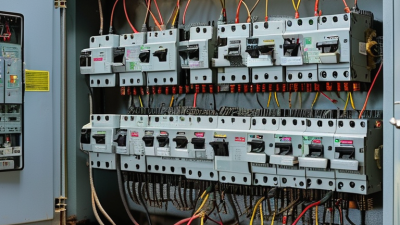
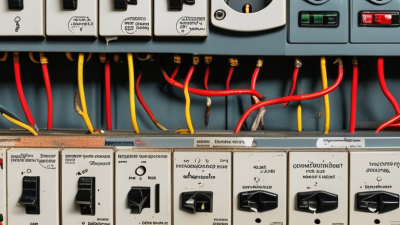
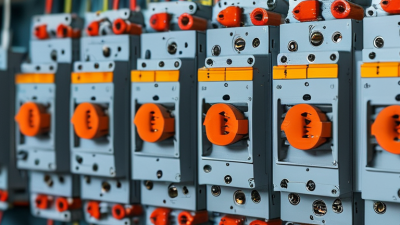
Choosing among China’s best electric circuit breaker suppliers requires more than comparing prices or catalog photographs. A reliable supplier should show factory experience, stable production, and clear testing records. Look for compliance with IEC 60898-1 or IEC 60947-2, depending on the application. Ask for rated current, breaking capacity, trip curves, insulation performance, and temperature-rise data. These details matter inside a crowded control cabinet.
Thomas Edison, a pioneer of electrical systems, once said, “We will make electricity so cheap that only the rich will burn candles.” His vision highlights the value of accessible power, but safe distribution remains essential. Every electric circuit breaker must interrupt faults quickly and consistently. A supplier’s laboratory should demonstrate this with documented short-circuit tests, not only attractive certificates. Factory audits can also reveal practical issues, such as loose terminal screws, uneven molding, or poor label durability.
Real experience changes the decision. A buyer may test several samples, install them under heat, and compare trip performance after repeated switching. Small differences can become costly failures. Communication matters too. Strong suppliers explain tolerances, production batches, warranty limits, and replacement support without vague promises. Still, no shortlist is perfect. Certificates may be genuine, yet production quality can vary between batches. Independent inspection is worth considering. The best supplier is not always the cheapest one. It is the partner that can prove safety, consistency, and accountability over time.
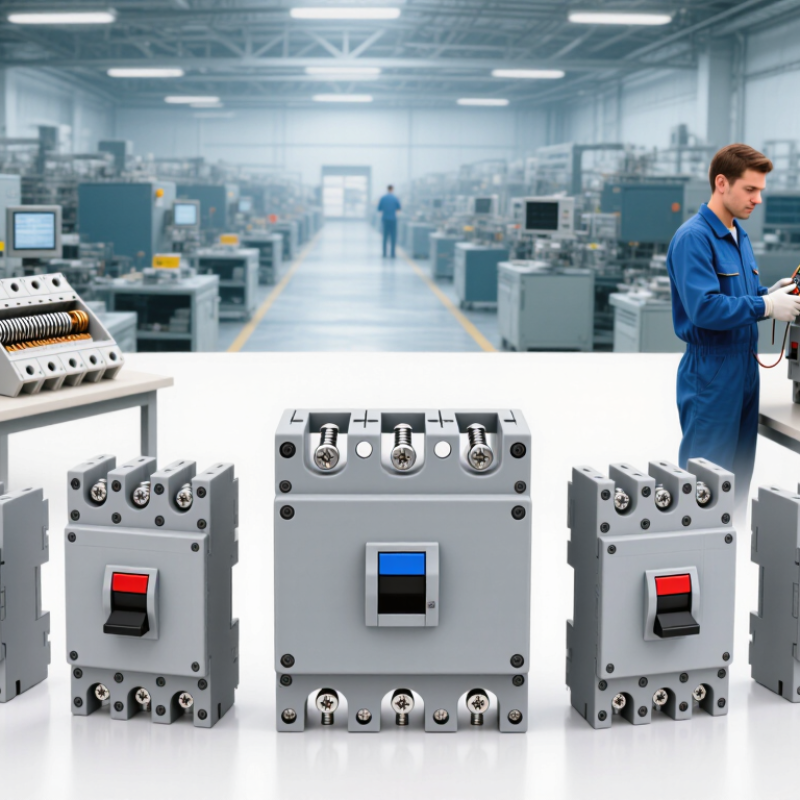
China has become a major source of electric circuit breakers because its supply chain is unusually complete. Copper contacts, molded cases, springs, testing equipment, and packaging can often be sourced within one industrial region. This proximity shortens production cycles and supports practical customization. Manufacturers may adjust current ratings, terminal layouts, enclosure sizes, and labeling for different projects.
Experienced buyers also value China’s broad manufacturing depth. A factory can produce compact breakers for residential panels and heavier units for commercial distribution boards. Many suppliers use automated assembly lines, thermal-magnetic testing, insulation checks, and repeated trip tests. These steps matter because a breaker may operate quietly for years, then respond in a fraction of a second during a fault. Ask for test reports, quality records, traceability details, and samples from the same production line. Capability claims alone are not enough.
Tips:
Compare samples before prices. Check terminal torque, trip consistency, heat rise, and marking quality. Confirm compliance with the standards required in your market, not merely a general certificate. Factory audits can reveal storage problems or rushed inspections. Specifications may look perfect on paper, yet small inconsistencies can appear during repeated testing. That is why independent verification remains worthwhile, even when a supplier seems experienced. China offers scale and flexibility, but careful evaluation still separates a dependable source from an attractive quotation.
Chinese manufacturers supply several breaker types for homes, factories, buildings, and utility networks. Miniature circuit breakers (MCBs) protect lighting and socket circuits from overloads and short circuits. Molded case circuit breakers (MCCBs) handle higher currents and offer adjustable trip settings. Air circuit breakers (ACBs) support low-voltage main distribution boards. Residual current devices, including RCCBs and RCBOs, help reduce electric shock and leakage risks. For medium-voltage systems, vacuum circuit breakers are widely selected because they require limited maintenance. Some suppliers also produce gas-insulated solutions for specialized installations.
Demand is growing with renewable power, urban construction, and industrial automation. MarketsandMarkets’ 2024 outlook estimated the global circuit breaker market could reach about USD 10 billion by 2028. The estimate varies between reports, so buyers should avoid using market size alone. IEC 60947-2 and IEC 60898-1 provide important testing frameworks for low-voltage breakers. For export projects, verify rated voltage, breaking capacity, temperature performance, and certification records. A low price is not proof of value. A neat specification sheet can still hide weak testing practices.
Tips: Match the breaker to the actual load, cable size, fault level, and installation environment. Request test reports from independent laboratories when possible. Check production consistency through sample testing and factory audits. Also inspect terminals, trip mechanisms, labeling, and enclosure strength. The “best” supplier is rarely universal. It depends on application, documentation, after-sales support, and honest technical communication.
Choosing China’s best electric circuit breaker supplier requires more than comparing prices. A polished website proves little. Check the factory’s production scope, testing equipment, and engineering team. Ask for current technical datasheets, wiring diagrams, rated current ranges, breaking capacity, and operating temperature limits. Clear answers usually indicate stronger technical control.
Request samples from the same production line used for regular orders. Test them under realistic loads, including repeated switching and heat exposure. Verify conformity with relevant standards, such as IEC 60947-2, through traceable certificates and laboratory reports. Do not accept certificates with unclear numbers or mismatched product models. An independent inspection can also examine contact materials, insulation distance, terminal torque, and batch labeling.
Look beyond the first shipment. Reliable suppliers explain quality checkpoints, corrective actions, spare-part support, and response times. Review their export records and speak with comparable industrial customers when possible. A factory may offer excellent samples but inconsistent mass production. That risk deserves attention. No evaluation is perfect. I would also compare packaging strength, lead-time accuracy, and communication during a small trial order. Delayed replies often become bigger problems after payment. Price matters, but stable performance, documented testing, and accountable service usually matter more.
When evaluating China’s best electric circuit breaker suppliers, certifications should be checked before price. Ask for certificates matching the exact model, rating, and factory. IEC 60947-2 commonly covers industrial circuit breakers, while IEC 60898-1 applies to household installations. These standards address temperature rise, short-circuit performance, endurance, and insulation. A certificate alone is not enough. Confirm the issuing laboratory, report number, test date, and product photographs. Small details matter.
For export markets, verify required marks and approvals, such as CE under applicable European rules or CCC for the Chinese market. Do not treat a printed logo as proof. Request a declaration of conformity, critical component list, and traceable production records. An experienced supplier should explain trip curves, rated current, breaking capacity, and coordination with upstream protection. Ask for routine test records from recent batches. Real evidence beats polished brochures.
Quality also lives on the production line. Check contact materials, torque settings, insulation gaps, and test equipment calibration. A factory audit can reveal inconsistent labeling, dusty assembly areas, or missing sampling plans. I would request samples from different production dates, not one carefully prepared unit. Even strong suppliers can show variation. That risk deserves discussion. Review warranty terms, failure analysis procedures, and response times before approving a long-term order.
The chart compares the publication year of widely referenced standards for low-voltage circuit breakers and electrical assemblies. Buyers should verify the supplier’s applicable test reports, certificates, factory quality-system records, and the current edition accepted in the destination market. Publication year alone does not confirm product compliance.
China Best Electric Circuit Breaker Suppliers?
Choosing a circuit breaker supplier requires more than comparing unit prices. The IEA Electricity 2024 report expects global electricity demand to grow by about 4% in 2024 and 2025. This growth increases pressure on project schedules, testing capacity, and replacement support. Ask suppliers for verified ratings, including voltage, current, Icu, Ics, and operating temperature. A suitable supplier should provide routine test records and clear production traceability. Do not accept attractive specifications without evidence.
Check whether the factory follows IEC 60947-2 and maintains a documented quality system, such as ISO 9001 certification. Request samples from the same production line used for bulk orders. Inspect terminal strength, enclosure finish, labeling, and trip response. The IEC 60947-2 framework covers low-voltage circuit-breaker performance and testing requirements. Independent laboratory reports add credibility, especially for short-circuit capacity. Certificates alone are not enough.
Review practical service before signing a contract. Confirm response times, spare-part availability, inspection procedures, packaging strength, and complaint handling. A factory audit can reveal simple weaknesses, such as poor storage or inconsistent torque control. I have seen projects focus too heavily on price and regret it later. That mistake remains common. Compare total ownership cost, not only the purchase invoice. A supplier that answers technical questions clearly is usually easier to manage during installation and future maintenance.
| Selection Dimension | Recommended Benchmark | Evidence to Request from the Supplier | Why It Matters | Suggested Weight |
|---|---|---|---|---|
| Applicable Standards | Low-voltage circuit breakers should be tested against the standard required by the destination market, such as IEC 60947-2, IEC 60898-1, UL 489, or GB/T 14048.2. | Current certificates, test reports, certificate scope, product model numbers, and the name of the independent testing organization. | Confirms that the product is suitable for the intended installation and import market. | 15% |
| Rated Voltage | Select a breaker whose rated operational voltage is equal to or higher than the system voltage. Common low-voltage project levels include 230/400 V AC and 120/208 V AC. | Technical datasheet showing rated insulation voltage, rated operational voltage, frequency, and pole configuration. | Prevents incorrect application and helps maintain insulation and switching performance. | 8% |
| Rated Current | The selected rating should coordinate with the calculated design current, conductor ampacity, ambient temperature, and allowable overload. Typical product ranges are 6–63 A for miniature breakers and approximately 16–1,600 A for molded-case breakers. | Current-rating table, derating curves, terminal temperature-rise data, and recommended conductor sizes. | Reduces nuisance tripping and protects cables and equipment from overheating. | 10% |
| Short-Circuit Breaking Capacity | The interrupting rating must be at least equal to the prospective short-circuit current at the installation point. Common low-voltage values include 6 kA, 10 kA, 15 kA, 25 kA, 36 kA, and 50 kA. | Icn or Icu/Ics ratings, test conditions, utilization category, and coordination information. | This is a critical safety parameter for safely interrupting fault current. | 15% |
| Trip Characteristics | For miniature breakers, B, C, and D curves are commonly used: B for low inrush loads, C for general commercial loads, and D for higher motor or transformer inrush. | Time-current curves, magnetic trip range, thermal trip data, and application recommendations. | Ensures reliable protection without unnecessary trips during normal starting currents. | 8% |
| Project Compatibility | Confirm compatibility with residential distribution boards, commercial panels, industrial switchboards, motor-control systems, solar installations, or energy-storage systems as applicable. | Dimensional drawings, mounting method, terminal arrangement, accessory list, and enclosure compatibility details. | Avoids installation delays, retrofitting costs, and incompatible accessories. | 8% |
| Quality Management | A documented quality-management system, preferably certified to ISO 9001, with traceable incoming, in-process, and final inspection controls. | Quality certificate, inspection plan, sample inspection records, calibration records, and nonconformity-handling procedure. | Demonstrates repeatable manufacturing quality rather than relying only on product samples. | 10% |
| Testing Capability | The supplier should perform routine checks for electrical continuity, insulation, trip operation, mechanical operation, and appearance before shipment. | Routine-test checklist, batch test records, sampling plan, and details of calibration for test equipment. | Improves consistency and identifies defects before products reach the project site. | 8% |
| Customization and Engineering Support | The supplier should be able to support accessories such as auxiliary contacts, alarm contacts, shunt trips, undervoltage releases, motor operators, and communication modules when required. | Accessory compatibility matrix, wiring diagrams, sample engineering drawings, and technical response time. | Supports system integration and reduces design changes during installation. | 7% |
| Lead Time and Supply Capacity | For standard products, a practical target is approximately 2–6 weeks after technical approval; customized or high-volume orders may require longer planning. | Written production schedule, monthly capacity information, order-change policy, and shipment-performance records. | Helps protect the project schedule and reduce the risk of material shortages. | 5% |
| Warranty and After-Sales Service | A clearly defined warranty period, replacement procedure, technical-support channel, and response-time commitment should be included in the quotation. | Warranty terms, claims process, spare-parts policy, service contacts, and escalation procedure. | Limits downtime and clarifies responsibilities if field problems occur. | 4% |
| Total Evaluation Weight | Use a weighted score from 1 to 5 for each dimension, then multiply each score by the corresponding weight. | Compare at least three technically qualified quotations using the same specification and scoring method. | Creates a transparent supplier-selection process based on safety, compliance, quality, and delivery performance. | 100% |
Note: Ratings and product ranges are indicative selection references. Final circuit-breaker specifications must be verified against the electrical design, prospective fault current, installation conditions, local regulations, and the latest applicable product documentation.