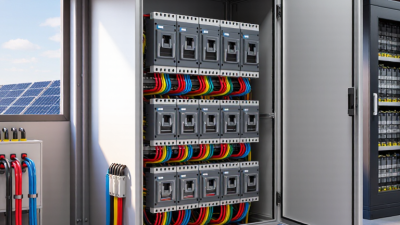
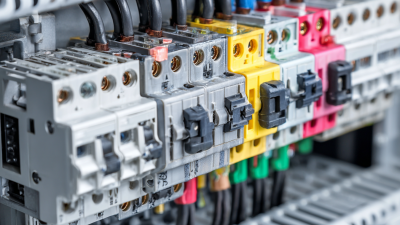
How to Choose China Top DC MCCB Manufacturers?
Choosing a reliable China dc mccb manufacturer requires more than comparing prices on a marketplace.
A qualified supplier should understand your system voltage, continuous current, fault level, polarity, and installation environment. These details shape the breaker’s frame size, pole arrangement, trip mechanism, and arc-extinguishing design. As electrical protection specialist Dr. J. C. Das has stated, “DC interruption is difficult because the current does not naturally cross zero.” That principle matters in solar arrays, battery storage, electric vehicles, and telecom systems.
Look for manufacturers with documented design experience. Review product datasheets, type-test reports, factory inspection records, and certification scopes. Check whether the stated breaking capacity applies to your exact DC voltage. A rating at 250 VDC may not remain valid at 600 VDC. Small details matter.
Ask about thermal-magnetic or electronic trip units. Confirm adjustable settings, isolation distance, mechanical endurance, and terminal compatibility. Request a sample before placing a large order. Test it under realistic temperature and load conditions.
A low quote can look attractive. It may hide weak documentation, inconsistent materials, or limited after-sales support. Even experienced buyers can miss this. I would also question vague claims such as “international quality” without test evidence.
The strongest China dc mccb manufacturers usually provide traceable components, stable production processes, responsive engineering support, and clear warranty terms. Compare factories, not just catalogs. Speak with their engineers. Visit the production line when possible. Your final choice should balance electrical safety, verified performance, lifecycle cost, and practical cooperation. Mistakes are expensive, but careful verification is still cheaper than a field failure.

Define Your DC MCCB Requirements and Application Conditions
How to Choose China Top DC MCCB Manufacturers?
Before comparing DC MCCB manufacturers, define the real operating conditions. Record the system’s rated voltage, continuous current, short-circuit current, pole configuration, and load type. A battery cabinet, photovoltaic combiner, and charging system may need different protection behavior. Check whether the breaker must provide isolation, overload protection, short-circuit interruption, or frequent switching. These functions are not always identical.
Measure the installation environment carefully. Note ambient temperature, altitude, humidity, dust, vibration, and available enclosure space. Derating may apply when current rises or ventilation is limited. Confirm the required interrupting capacity with a qualified electrical engineer. Also review terminal size, cable material, connection direction, auxiliary contacts, and trip indication. A reliable manufacturer should provide test reports, technical drawings, traceable specifications, and clear application limits. Be cautious when a supplier only highlights maximum current.
Tips: Prepare a one-page requirement sheet before requesting quotations. Include normal load, fault current, duty cycle, and installation photos. Ask manufacturers to explain their selection, not merely send a price. Compare test evidence and service response. Small omissions can become expensive later.
Field experience also shows that initial assumptions can be wrong. A breaker selected for continuous current may trip during battery charging peaks. A compact enclosure may create unexpected heat. Recheck the design after installation data becomes available. Good manufacturers accept technical questions and discuss limitations openly. That is a practical sign of reliability.
Assess Manufacturer Qualifications, Certifications, and Production Capacity
Choosing a China-based DC MCCB manufacturer requires more than comparing prices.
Start by checking legal registration, manufacturing scope, export history, and technical staff. Ask for certificates matching the actual product, not a generic company folder. Verify issuing bodies, certificate numbers, validity dates, and covered models. Test reports should identify rated voltage, current, breaking capacity, and applicable standards. A certificate without model-level traceability deserves caution. Keep records.
Production capacity becomes visible on the factory floor.
Request a video or on-site audit of stamping, molding, assembly, calibration, and final inspection. Look for controlled storage, labeled batches, torque tools, and test benches with current calibration records. Ask how many MCCBs can be delivered monthly in your required configuration. Separate installed capacity from available capacity. A large number can mislead. Be precise.
Review quality records from incoming copper parts to trip-unit testing.
Reliable manufacturers can explain sampling plans, failure handling, and corrective actions with dates and evidence. Request sample units from different production lots, then compare trip current, insulation performance, temperature rise, and mechanical operation. Do not rely only on one successful sample. It may hide process variation. One overlooked question concerns spare-parts support after delivery. Clarify warranty terms, replacement lead times, and technical response channels before signing. Factory claims should meet field reality.
Evaluate Quality Control, Customization, Pricing, and Delivery Terms
Choosing a leading China DC MCCB manufacturer requires evidence beyond a polished factory tour. Grand View Research estimated the global circuit breaker market at about USD 7.6 billion in 2023, with continued growth expected through 2030. This expansion increases supplier choices, but also makes verification harder. Request IEC 60947-2 test reports, temperature-rise records, short-circuit data, and production traceability. Inspect whether each unit carries a clear batch code, torque specification, and final inspection record. ISO 9001 certification helps, but it does not prove every breaker is consistent.
Tips: Ask for three recent test samples from different batches. Compare trip curves, terminal design, enclosure materials, and accessory compatibility. For customization, define pole count, rated current, voltage, breaking capacity, mounting dimensions, and auxiliary contacts in one drawing. A small drawing error can delay an entire panel project. Pricing should include testing, tooling, packaging, spare parts, and warranty handling. The lowest quotation may exclude critical services.
Delivery terms deserve the same scrutiny as electrical performance. Confirm sample lead time, mass-production capacity, inspection points, export packaging, and the remedy for late shipment. Request a written tolerance for production variation. A supplier promising ten-day delivery may be relying on unverified inventory. I have seen schedules fail because customized labels and terminals were treated as minor details. Use staged payments tied to approved samples and inspection results. Independent pre-shipment inspection adds cost, yet it can reveal loose terminals, incorrect markings, or damaged housings before dispatch.
Verify After-Sales Support, Warranty Coverage, and Supplier Reliability
How to Choose China Top DC MCCB Manufacturers?
After-sales support often separates a dependable DC MCCB manufacturer from a cheap supplier. Ask for a written service process before placing an order. It should identify response times, technical contacts, spare-parts availability, and escalation steps. Ask for proof. A clear answer is more valuable than a polished sales promise. Check whether engineers can diagnose tripping, overheating, or terminal damage remotely. Local service partners may reduce downtime, but their qualifications should be documented.
Warranty coverage needs careful reading. Confirm the warranty period, starting date, covered components, and replacement procedure. Some warranties begin at shipment, not commissioning. That detail can matter. Request sample warranty terms and a list of exclusions, including incorrect installation, overload, moisture, and unauthorized modifications. Serial numbers, inspection records, and factory test reports should connect each MCCB to its production history. Without traceable records, a warranty claim may become slow and uncomfortable.
Supplier reliability is broader than product quality. Review export experience, production capacity, quality certifications, and independent customer references. A factory video is useful, but it is not a complete audit. When possible, inspect assembly areas, testing equipment, calibration records, and finished-goods storage. Evaluate how the supplier handles a damaged unit, not only a successful delivery. Some manufacturers answer quickly before payment, then become difficult later. This is a warning sign, although not absolute proof. A short trial order can reveal packaging quality, communication habits, and real response speed before a larger commitment.