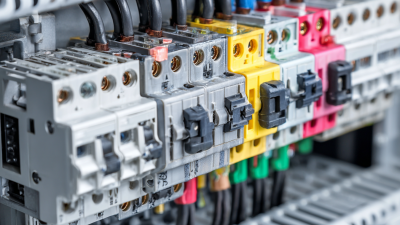
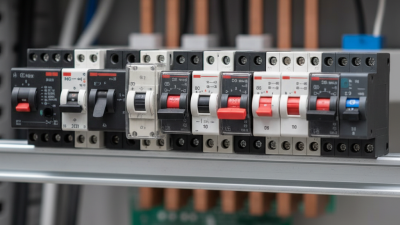
As solar arrays, battery storage systems, and electric transport expand, DC protection is becoming a practical design priority. The International Energy Agency reported that global renewable capacity additions reached almost 510 GW in 2023, with solar power leading growth. More installed DC equipment means more conductors, enclosures, and fault conditions requiring careful protection. A dc circuit breaker is not simply an AC breaker with different labels. Direct current can sustain an arc because the current does not naturally cross zero. Small selection errors may create serious thermal and maintenance concerns.
This guide introduces seven practical tips for choosing a suitable device. It considers rated voltage, continuous current, interrupting capacity, pole configuration, trip characteristics, environmental conditions, and certification. IEC 60947-2 provides important requirements for low-voltage circuit breakers, while UL standards support product evaluation for specific North American applications. These documents should guide the decision, not replace engineering judgment. A device rated for 500 V DC may still be unsuitable for a battery string with high prospective fault current. Check the entire circuit.
Field experience also shows that installation details matter. Cable length, ambient temperature, ventilation, connection torque, and enclosure spacing can change real performance. The IEA’s Renewables 2024 report confirms the rapid scale of modern power systems, but growth does not remove design uncertainty. Data sheets can be incomplete. Product names can be confusing. Even experienced teams should verify test conditions, certification scope, and manufacturer instructions before purchase. A checklist helps, but it cannot correct a weak system study. These seven tips aim to make that review clearer, safer, and more defensible.

7 Tips for Choosing a DC Circuit Breaker
Understanding DC Circuit Breaker Types and Their Applications
Selecting a DC circuit breaker begins with the system’s voltage and current. A breaker must match both values, with suitable safety margins. Arc behavior matters. Unlike AC arcs, DC arcs do not naturally extinguish at zero current. Choose a model designed specifically for DC systems, not a similar-looking AC device.
Consider these seven practical points. Check the rated voltage for each pole and confirm the required breaking capacity. Identify the circuit type, such as solar, battery storage, telecommunications, vehicle control, or industrial machinery. Thermal-magnetic breakers suit many conventional loads, while electronic types can provide faster, more adjustable protection. For sensitive equipment, review trip curves carefully. Examine polarity requirements, because some DC breakers need correct line and load orientation. Verify the ambient temperature and enclosure conditions. Finally, confirm terminal size, wiring space, and installation method.
Read the label.
In field work, nuisance trips often reveal overlooked inrush current or heat inside a crowded panel. I still recheck these details, because a technically correct selection can fail when installed poorly. Compare the breaker’s interrupt rating with the available short-circuit current. Review applicable electrical standards and the manufacturer’s tested application data. A compact breaker may fit perfectly, yet lack the endurance needed for frequent switching. For high-energy battery systems, obtain professional review before installation. My earlier assumption was that a higher current rating always offered more protection; it did not. The cable, load, fault level, and coordination must work together.
Understanding DC circuit breaker types and their applications
The chart shows representative continuous-current rating ranges commonly used in different DC applications. Actual selection must be based on the system voltage, fault current, cable size, ambient temperature, installation method, and the breaker’s certified DC interrupting capacity.
Choosing a DC circuit breaker starts with voltage, not appearance. Verify nominal and maximum voltage, including charging peaks. The breaker’s DC voltage rating must equal or exceed that maximum. DC arcs do not naturally cross zero. Interrupting them requires suitable contact spacing and arc control.
IEC 60947-2 defines performance and test requirements for low-voltage circuit breakers. Match polarity and connection requirements too. A compact device can still be unsuitable.
Set current from the real load profile. Identify continuous load, inrush, battery contribution, and ambient temperature. For continuous loads, apply the 125% sizing principle where NFPA 70 requires it.
Then check conductor ampacity and allowable temperature. Do not simply copy the cable label. Verify the breaker’s interrupting rating against available DC fault current.
Battery banks can deliver very high short-circuit current. The number matters.
Seven practical checks help:
Coordination matters when multiple breakers share a bus. Upstream protection should not trip before the downstream device without reason.
The IEA Electricity 2024 report projects roughly 4% annual global electricity-demand growth through 2026, increasing pressure on compact DC systems.
Standards guide selection, but site measurements reveal surprises. Recheck after installation. Assumptions age quickly.
7 Tips for Choosing a DC Circuit Breaker
Interrupting capacity is the first serious checkpoint when selecting a DC circuit breaker. It must exceed the prospective short-circuit current at the installation point. Check both voltage and current ratings. A breaker rated for 48 VDC may not safely interrupt a 125 VDC fault. DC arcs can persist because the current does not naturally cross zero. That detail is easy to underestimate.
Calculate fault current from the battery, power supply, or photovoltaic array. Include cable length, conductor resistance, and parallel sources. A short cable near a battery can deliver surprisingly high current. Leave a safety margin instead of matching the calculated value exactly. Manufacturer test conditions may differ from your cabinet temperature or wiring layout. The calculation is useful, but not perfect.
Protection requirements should match the conductors and connected load. Confirm continuous current, starting current, overload behavior, and short-circuit protection. Motors and capacitive equipment may create brief inrush currents. A breaker that trips during every startup is poorly selected, even if its interrupting capacity looks adequate. Coordinate upstream and downstream devices when possible, so only the affected branch disconnects. Check ambient temperature, enclosure heat, altitude, and available adjustment ranges. Field inspections often reveal one overlooked issue: the breaker protects the equipment, but not the smallest conductor in the circuit.
Choosing a DC circuit breaker starts with the load’s real operating profile, not only its rated current. A thermal trip responds to sustained overloads and suits circuits with moderate startup demand. A magnetic trip reacts quickly to short circuits, but high inrush current may cause unwanted interruption. Electronic trip units offer adjustable thresholds and delay settings. They can provide better coordination between upstream and downstream protection.
The operating mechanism matters just as much. A manual breaker may work well in a small control cabinet. Remote equipment may need a motorized mechanism, shunt trip, or undervoltage release. Check whether the breaker can open and close reliably under the available DC voltage. Polarity, voltage drop, and stored energy can affect performance. The mechanism should also match the required switching frequency.
Do not trust a catalog curve blindly. Compare the trip curve with motor startup current, cable capacity, and the power supply’s short-circuit current. A practical check is measuring current during startup with the equipment fully loaded. That detail often exposes false assumptions. Test the breaker at realistic temperatures when possible. Cold and hot conditions can change thermal response. Maintenance access deserves attention too. A difficult test button or cramped terminal area may create avoidable service errors. Select interrupting capacity from verified system data, not guesswork. Some installations need more review than expected.
When choosing a DC circuit breaker, inspect the installation site before comparing ratings. Measure panel space, cable routes, and terminal access. Small details matter. Check ambient temperature, humidity, dust, vibration, and altitude. These conditions can change the breaker’s performance and service life. Confirm the system’s maximum DC voltage, continuous current, polarity, and prospective short-circuit current. Never select a breaker from load current alone. A breaker may fit electrically but fail under real installation conditions. Cable size and connection torque also require careful verification.
The selected device should follow the standard required by the project and local regulations. Relevant standards may include IEC 60947-2 or an applicable national equivalent. Confirm certification, tested interrupting capacity, and suitability for direct-current applications. DC arcs do not naturally cross zero like AC arcs, so correct polarity and arc-control design are essential. Check whether temperature derating applies inside an enclosure. Do not guess. Ask a qualified engineer to review unclear ratings, especially in battery systems or high-current equipment.
Maintenance needs should influence the choice from the beginning. Leave enough clearance for inspection and safe isolation. Plan visual checks for heat marks, loose terminals, corrosion, and damaged insulation. Thermal inspection can reveal hidden resistance at a connection. Record trip events and test results. Replace components after severe fault interruption when the manufacturer’s instructions require it. A clean panel is not proof of reliability. In practice, maintenance schedules are often too optimistic, and dusty environments may demand shorter intervals. Good documentation makes that weakness visible.
| No. | Selection Tip | What to Check | Practical Selection Guidance | Why It Matters |
|---|---|---|---|---|
| 1 | Confirm the DC System Voltage | Identify the nominal voltage and the highest possible operating voltage, including battery charging voltage, power-supply tolerance, and transient conditions. | Select a breaker with a DC voltage rating equal to or higher than the maximum system voltage. Verify the rating for the actual pole configuration and polarity arrangement. | DC arcs do not naturally pass through a current zero as AC arcs do. An unsuitable voltage rating can make arc interruption unsafe. |
| 2 | Match the Continuous Current Rating | Determine the normal load current, expected continuous load duration, conductor ampacity, and the available enclosure ventilation. | Choose a continuous current rating that is not lower than the design load. Apply the applicable equipment and conductor derating requirements instead of selecting solely from the nominal load value. | Correct sizing helps prevent nuisance tripping, excessive terminal heating, conductor damage, and reduced service life. |
| 3 | Verify the DC Interrupting Rating | Calculate or obtain the prospective short-circuit current at the installation point, considering battery capacity, cable impedance, parallel sources, and upstream equipment. | The breaker interrupting rating must be equal to or greater than the available DC fault current at its rated voltage and in the specified pole configuration. | If the fault current exceeds the interrupting rating, the breaker may fail to clear the fault safely and can release dangerous energy. |
| 4 | Check Installation Conditions | Review ambient temperature, altitude, humidity, dust, vibration, enclosure dimensions, mounting orientation, cable bending space, and accessibility. | Follow the breaker manufacturer's published limits and derating curves. Confirm that the enclosure provides suitable environmental protection and adequate heat dissipation. | Temperature, contamination, poor ventilation, and mechanical stress can reduce current capacity and affect trip performance. |
| 5 | Use the Correct Standards and Approvals | Identify the governing electrical code, project specification, installation location, and required certification or conformity assessment. |
For low-voltage circuit breakers, commonly applicable references include:
IEC 60947-2 UL 489 Confirm that the chosen device is evaluated for the intended DC application, voltage, current, and interrupting conditions. |
A device suitable for AC service is not automatically suitable for DC service. Standards help define performance, testing, marking, and safety requirements. |
| 6 | Evaluate Poles, Polarity, and Isolation | Determine whether the circuit requires one-pole, two-pole, or multi-pole switching, and identify whether the positive, negative, or both conductors must be disconnected. | Use a configuration specifically rated for the circuit's DC polarity and switching arrangement. For circuits requiring isolation of both conductors, use a properly rated multi-pole device with coordinated operation. | Incorrect pole or polarity arrangements can leave hazardous voltage present during maintenance or interfere with the breaker's ability to extinguish the DC arc. |
| 7 | Plan Maintenance and Testing | Review access requirements, operating frequency, trip history, thermal conditions, terminal torque, insulation condition, and the site's electrical maintenance program. | Establish inspection intervals according to the equipment instructions, operating environment, fault exposure, and documented maintenance program. After a high-current fault, inspect or replace the breaker as required by the product instructions. | Routine inspection can identify loose connections, overheating, contamination, corrosion, mechanical damage, or a breaker that has reached the end of its useful life. |