What Are the Top Switch Disconnector Manufacturers?

Choosing a switch disconnector manufacturer is not just a brand comparison. The device must suit the installation, withstand expected operating conditions, and provide dependable isolation during maintenance. A wrong rating can turn a tidy panel into a costly problem. The details matter.

Electrical safety educator Mike Holt emphasizes a principle relevant to equipment selection: “Safe electrical work depends on understanding the system, not just the device.” This is a concise paraphrase of his safety-focused teaching, not a verified verbatim quotation. For switch disconnector buyers, that means checking rated current, operating voltage, pole configuration, utilization category, and enclosure protection before comparing product ranges. A catalogue photo cannot show how a unit performs in a real cabinet.

This guide examines leading manufacturers and the factors that distinguish them, including product coverage, technical documentation, customization, and support. It also considers practical details, such as whether terminals are easy to reach with insulated tools and whether markings remain legible after installation. These points can be overlooked. Manufacturer rankings are not universal; the best choice depends on the application, local technical requirements, and project priorities. Verify specifications against current product documents and consult a qualified electrical professional when needed. One detail may change the decision: availability of the exact configuration, not just the company’s reputation.
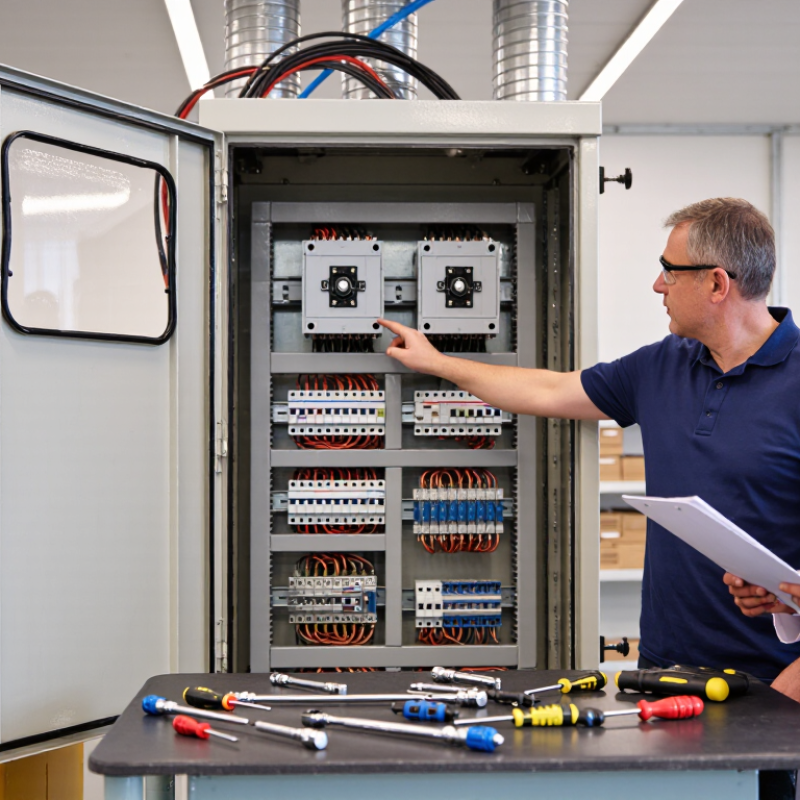
What Are the Top Switch Disconnector Manufacturers?

What Is a Switch Disconnector and Where Is It Used?

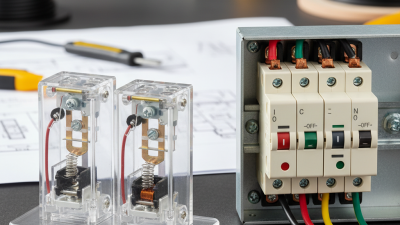
A switch disconnector is a mechanical device used to switch an electrical circuit and isolate it from its power source. In the open position, it creates separation intended to support safe inspection or maintenance. Its exact isolation features depend on the device design, so check the manufacturer’s technical documentation rather than relying on appearance alone.

You’ll find switch disconnectors in industrial control cabinets, building services, machinery, and renewable-energy installations. A cabinet-mounted handle may let an operator shut off power before servicing a motor or replacing equipment. That small action matters. The device does not necessarily provide overcurrent protection, so it may need coordination with a suitable fuse or circuit breaker. Ratings for operating voltage, current, load type, and enclosure protection should match the installation.

When comparing manufacturers, look for clear specifications, installation guidance, and evidence that products are tested for their stated applications. Consider the surrounding conditions too: dust, moisture, heat, and frequent operation can affect the choice. There is no single best unit for every panel. Even experienced buyers can overlook a detail, so confirm the load and isolation requirements with a qualified electrical professional.

How Are Leading Switch Disconnector Manufacturers Evaluated?

Leading switch disconnector manufacturers should be judged by verified performance, not catalogue claims. Check conformity with IEC 60947-3, then compare rated current, voltage, utilization category, and mechanical and electrical endurance. Ask for test documentation, production traceability, and clear installation instructions. A polished datasheet is useful, but it cannot replace test evidence.

The IEA’s 2023 report, Electricity Grids and Secure Energy Transitions, projects annual grid investment above USD 600 billion by 2030, more than double current levels. This is infrastructure context, not a ranking of manufacturers. For procurement, assess temperature-rise results, terminal strength, enclosure protection, and performance under the intended operating conditions. Review warranty terms, delivery consistency, and access to technical support. Field evidence matters. One weakness in many comparisons is limited public failure data, so request anonymized service records where available.

Tips: Compare equivalent ratings and test conditions. Ask how samples were tested, and check whether certificates cover the exact product configuration. A scorecard helps, but site conditions still matter.

What Are the Top Switch Disconnector Manufacturers? - How Are Leading Switch Disconnector Manufacturers Evaluated?
Evaluation Criterion Suggested Weight What to Evaluate Evidence to Check
Product safety and standards compliance 20% Whether the relevant switch-disconnector product range is designed and tested to applicable standards for its intended market and installation. Current certificates, test reports, product markings, and declarations referring to applicable requirements, such as IEC 60947-3 or relevant national standards.
Electrical ratings and application suitability 18% Rated operational voltage and current, utilization category, pole configuration, and suitability for the specified load and switching duty. Datasheets and selection tables showing ratings and utilization categories, such as AC-22A or AC-23A where applicable under IEC 60947-3.
Short-circuit coordination 15% How the device is coordinated with upstream protective devices and whether the published short-circuit ratings match the installation requirements. Manufacturer coordination tables, conditional short-circuit ratings, and clearly stated compatible fuse or circuit-breaker details.
Mechanical and electrical endurance 12% Declared operating endurance and performance under the relevant electrical load and switching conditions. Technical documentation specifying mechanical and electrical endurance, test conditions, and applicable operating categories.
Environmental and installation performance 10% Suitability for the installation environment, including enclosure protection, ambient temperature limits, and any required derating. IP ratings for the complete assembly where applicable, operating-temperature ranges, installation instructions, and derating data.
Product range and configuration options 10% Availability of appropriate current ratings, pole arrangements, mounting styles, operating mechanisms, and accessory options. Product catalogs, configuration guides, dimensional drawings, and accessory compatibility information.
Technical documentation and support 8% Clarity and completeness of installation, operation, maintenance, and product-selection information. Accessible datasheets, wiring diagrams, manuals, product lifecycle information, and documented technical-support channels.
Supply continuity and service capability 7% Ability to support the required project schedule and provide replacement products or service over the expected equipment lifecycle. Published lead-time information, distribution coverage, warranty terms, and documented replacement or product-obsolescence policies.
Total suggested weighting 100% Use the weights as a comparison framework and adjust them to match the project’s application, market, and risk requirements.

Scoring approach: Score each criterion from 1 (insufficient evidence or poor fit) to 5 (strong, verified fit), then apply the suggested weight. This framework compares documented product and service capabilities; it does not represent a verified ranking of specific manufacturers.

Which Manufacturers Are Prominent in the Global Market?

Prominent switch disconnector manufacturers tend to serve several regions and offer equipment for industrial plants, commercial buildings, and utility networks. Their reach often reflects more than production volume. Engineering support, documented testing, and access to replacement parts also matter. Some are broad electrical-equipment groups with extensive product ranges. Others focus on regional markets or particular voltage classes. There is no single reliable ranking: market position can change by product type and location.

Buyers can compare manufacturers by checking rated current, fault-handling capability, enclosure protection, and suitability for the installation environment. A unit near a dusty production line may need different protection from one inside a clean control room. Clear drawings and consistent technical data help engineers assess these details. Regional manufacturers may offer shorter delivery times, while larger international suppliers may provide wider service networks. Neither advantage guarantees a better fit. Catalogues can look similar, and small differences in operating conditions are easy to overlook. That is worth a second look. A practical comparison should include verified test documentation, local technical support, and the full lifecycle cost—not just the quoted price.

Switch-Disconnector Manufacturers: The Global Standards Context

IEC low-voltage equipment scope sets important voltage limits for products such as switch-disconnectors. These values show the AC and DC boundaries; they do not represent manufacturer rankings or market share.

Reference: IEC 60947-1 low-voltage scope specifies rated voltages up to 1,000 V AC or 1,500 V DC.

How Do Manufacturers Differ in Product Range and Support?

Manufacturers differ in how widely they cover current ratings, pole configurations, and installation styles. Some focus on compact switch disconnectors for control panels, while others offer larger units for machinery and distribution cabinets. A wider range can simplify sourcing, but it does not guarantee that every model suits a specific installation. Check the rated operational current, short-circuit coordination details, terminal capacity, and enclosure options against the actual design.

Look beyond the product sheet. Useful support includes clear wiring diagrams, dimensional drawings, selection help, and practical answers about mounting or accessory compatibility. Ask how technical questions are handled before ordering; a quick, precise response can prevent delays when a cabinet layout is already underway. Fast replies matter. So does accuracy.

Service depth can differ between manufacturers, even when their product ranges look similar. Some provide application guidance and replacement-part information, while others offer limited assistance after delivery. Confirm lead times, documentation availability, and how product changes are communicated. One detail is easy to overlook: support may depend on the local distributor, not only the manufacturer. It is worth checking that arrangement directly, since expectations are not always clear.

What Should Buyers Consider When Choosing a Manufacturer?

Choosing a switch disconnector manufacturer starts with matching the product to the installation, not comparing catalog prices alone. Confirm rated voltage, current, number of poles, utilization category, and expected fault conditions against the project specification. Request current test reports and applicable conformity documents. Check that the model numbers match the units being quoted. Paperwork matters.

A capable manufacturer should explain contact materials, enclosure ratings, operating life, and temperature limits in plain language. For a dusty workshop or damp utility room, ask how the enclosure and terminals perform under those conditions. Review production controls, including material inspection, routine electrical testing, batch traceability, and defect handling. Do not assume every factory tests every feature.

Service can reveal more than a polished brochure. Ask who answers technical questions and how replacement parts are handled. If practical, evaluate sample units before placing a large order. Compare realistic lead times, warranty terms, and written controls for design changes. A low quote may exclude testing or support. That deserves a second look. Even a detailed datasheet cannot confirm compatibility with every panel or installation; verify the fit against the actual project requirements.

Blogs