Choosing the right home circuit breaker is more than matching a number on a package. It is a safety decision involving current capacity, panel compatibility, fault protection, and local electrical requirements. A breaker that looks suitable may still be wrong for the panel, wiring, or connected equipment.
Mike Holt, a respected electrical educator, has often stressed, “Safety is the most important part of any electrical installation.” That principle guides this practical look at seven important selection tips. You will learn how to check the breaker’s amperage, voltage, pole configuration, interrupting rating, and compatibility with your service panel. You will also see why AFCI and GFCI protection deserve careful attention in bedrooms, kitchens, bathrooms, garages, and outdoor circuits.
Small details matter. A 15-amp breaker should not protect wiring designed for a different load. A loose connection can create heat behind the panel cover. Labels can fade. Memories can be wrong. I have seen homeowners choose a breaker by appearance alone, then discover that the mounting style or manufacturer series was incompatible. That mistake is easy to make, but it is not harmless.
This guide keeps the advice practical and evidence-based. It encourages checking the panel directory, reading manufacturer instructions, and consulting a qualified electrician when the installation is unclear. Local codes can differ, and older panels may hide additional concerns. A reliable home circuit breaker should fit the system, protect the conductors, and respond correctly during a fault. That sounds simple. It rarely is.
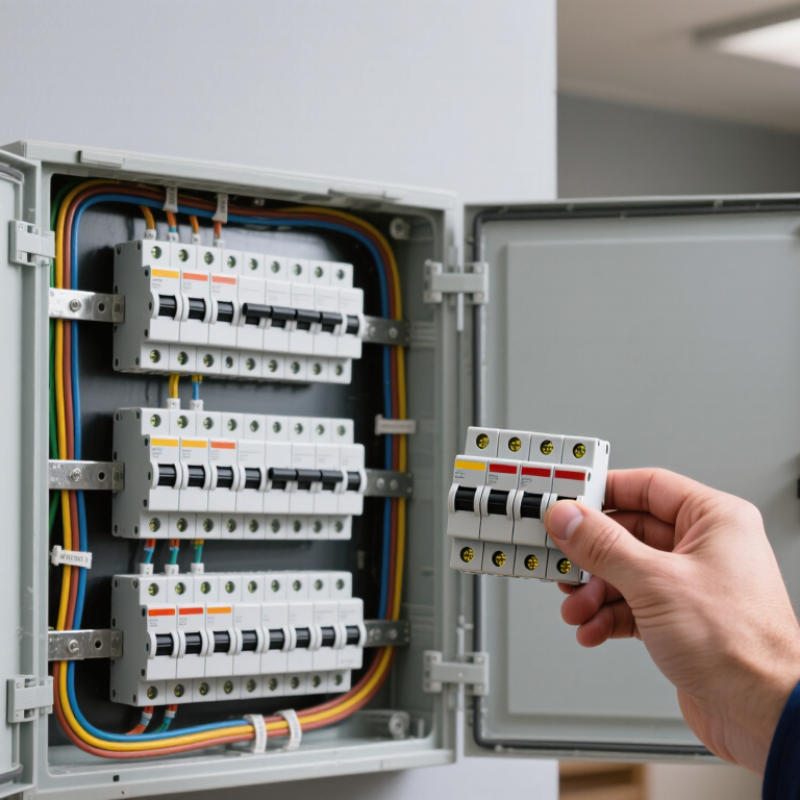
Choosing the right home circuit breaker begins with measuring demand, not guessing from appliance labels. Under the NEC, a continuous load operates for three hours or longer. Its calculated load should use no more than 80% of the breaker’s rating. In practice, a 20-amp breaker supports up to 16 amps of continuous load. Noncontinuous loads are added separately.
Tip 1: List every device on the circuit. Include lighting, receptacles, heating equipment, and motors. Check nameplate amperage, voltage, and expected operating time. A quick panel glance can mislead anyone. A circuit may appear lightly used while a heater, freezer, and tools operate together.
Tip 2: Multiply the continuous portion by 125%, then add noncontinuous demand. For example, 12 continuous amps become 15 calculated amps before other loads are included. Do not increase breaker size to stop nuisance tripping. The conductors, connections, and equipment must also support that rating.
Tip 3: Consider motor startup and future demand. A pump may draw more current briefly, even when its running load looks acceptable. Local electrical rules can modify NEC requirements, and installations vary. Have a qualified electrician verify conductor ampacity, panel capacity, termination temperature ratings, and available fault protection before replacement. I would recheck the calculation rather than trust a familiar breaker size.
Breaker amperage must protect the conductor, not simply match the appliance. A 20-amp breaker does not automatically suit every 12-gauge cable. Under NEC ampacity tables, copper 12 AWG may show 25 amps at 75°C, but the small-conductor rule typically limits it to 20 amps. Terminal ratings matter. Equipment rated 60°C may require the 60°C ampacity column, even when the wire insulation carries a higher temperature rating.
Temperature changes the calculation. Bundled cables, attic heat, conduit fill, and insulation can reduce allowable ampacity. Continuous loads also require adjustment. A load operating for three hours or longer generally needs 125% sizing under the NEC. For example, a 16-amp continuous load may require a 20-amp circuit, provided the conductor and terminals support that rating. Do not ignore neutral conductors in multiwire circuits.
A field inspection often reveals one careless shortcut: choosing the breaker from the cable label alone. That approach can miss terminal limits and correction factors. NFPA’s report Home Fires Involving Electrical Distribution and Lighting Equipment found an annual average of 32,620 U.S. home fires from 2015–2019. These fires caused about 470 deaths, 1,100 injuries, and 1.3 billion dollars in direct property damage. Those figures make conductor protection more than a paperwork detail. Check the complete installation. Local code adoption differs, and a qualified electrician should verify uncertain calculations before energizing the circuit.
Choosing the right home circuit breaker starts with the system voltage. In many homes, a single-pole breaker supplies 120 volts to lighting or receptacles. A two-pole breaker connects both legs for 240-volt equipment, such as an electric range or water heater. Check the panel schedule, wire size, and equipment label before choosing the number of poles. Do not assume a two-pole breaker is always better. It may be unsuitable for a 120-volt circuit.
The breaker’s voltage rating must meet or exceed the circuit voltage. A 120/240 V rating is commonly used in residential split-phase panels. Confirm that the breaker fits the panel’s approved design. Fit matters. The interrupting rating also deserves attention. A 10 kA rating means the breaker can interrupt up to 10,000 amps of fault current under specified conditions. It is not an estimate of normal circuit load. An electrician should verify the available fault current and local requirements. I once saw a panel label that was faded and difficult to read. Guessing would have been careless. Inspect terminals, bus connections, conductor insulation, and signs of heat damage. Select the correct ampere rating for the conductor, not merely for the appliance. Small details can change the decision. When uncertain, pause and obtain a documented evaluation from a qualified electrical professional.
| No. | Selection Tip | Recommended Specification | Key Facts and Typical Values | Practical Checking Method |
|---|---|---|---|---|
| 1 | Confirm the system voltage and number of poles | Use a 1-pole breaker for a 120 V circuit and a 2-pole breaker for a 120/240 V circuit requiring both ungrounded conductors. | A typical residential split-phase system supplies approximately 120 V from either ungrounded conductor to neutral and approximately 240 V between the two ungrounded conductors. | Verify the panelboard rating, circuit wiring, and equipment nameplate. A 2-pole breaker should connect to both required ungrounded conductors and provide common switching. |
| 2 | Match the breaker voltage rating | Choose a breaker with a voltage rating equal to or higher than the circuit voltage and approved for the panelboard. | Common home ratings include 120 V for branch circuits and 120/240 V for multiwire or 240 V loads. The breaker voltage rating must not be lower than the system voltage. | Read the voltage marking on the breaker and compare it with the panel schedule and measured system voltage. Do not use a 120 V-only breaker on a 240 V load. |
| 3 | Select the correct continuous current rating | Choose the ampere rating based on the calculated load and the allowable ampacity of the circuit conductors. | Common residential branch-circuit ratings include 15 A and 20 A. Larger dedicated loads may require 30 A, 40 A, 50 A, or another rating based on the equipment and wiring. | Check conductor size, insulation temperature rating, terminal limitations, and the equipment nameplate. A larger breaker must not be used simply to prevent nuisance tripping. |
| 4 | Verify the interrupting rating | Use a breaker with an interrupting capacity at least equal to the available fault current at the installation point. | A 10 kA interrupting rating means the breaker is rated to interrupt a short-circuit current up to 10,000 A under its specified test conditions. Many residential breakers are marked 10 kA, but this is not universal. | Check the breaker label for “10 kA” or “10,000 A” and consult the electrical design or utility fault-current information. Do not assume 10 kA is adequate for every service. |
| 5 | Choose the required protection function | Use standard, GFCI, AFCI, or dual-function protection according to the circuit location, load, and locally adopted electrical code. | GFCI protection helps reduce shock risk from ground-fault current. AFCI protection is intended to reduce fire risk from certain arcing conditions. Requirements vary by location and installation type. | Review the applicable code, local amendments, and inspection requirements. Confirm neutral handling, line/load markings, test-button operation, and compatibility with the circuit configuration. |
| 6 | Confirm panelboard and bus compatibility | Use only a breaker type specifically listed or identified for the installed panelboard and its bus arrangement. | Physical fit alone does not prove electrical compatibility. Incorrect bus engagement, connection geometry, or listing can create overheating and fault hazards. | Read the panel directory and labeling, inspect the approved breaker list, and compare the breaker’s installation instructions with the panelboard documentation. |
| 7 | Check installation conditions and final testing | Select equipment suitable for the enclosure, temperature, moisture exposure, conductor material, and required tightening torque. | Loose terminations can cause excessive heating. Breaker terminals must be tightened to the specified torque, and conductors must be correctly stripped and secured. | De-energize and verify the circuit before work. Follow the installation instructions, torque terminals correctly, label the circuit, and test GFCI/AFCI functions where applicable. |
Safety note: Circuit-breaker selection and installation should be performed or verified by a qualified electrician and must comply with the electrical code and requirements applicable to the installation location.
7 Tips for Choosing the Right Home Circuit Breaker
Evaluate AFCI and GFCI Protection Required by Current Safety Standards
Choosing a breaker involves more than matching its ampere rating. Tip 1: Identify the circuit’s purpose and connected load. Tip 2: Confirm the conductor size and panel rating before selecting protection. An oversized breaker can allow wiring to overheat. That mistake is serious. Tip 3: Check the current electrical code adopted in your area, because protection requirements vary by room and building type.
AFCI protection helps detect dangerous arcing, which can begin behind walls, inside damaged cords, or at loose connections. Many living areas, bedrooms, hallways, and similar circuits require AFCI protection under modern residential standards. Tip 4: Use an AFCI breaker or approved AFCI device where the code requires it. GFCI protection responds to current leaking toward ground. Tip 5: Look for GFCI requirements near sinks, bathrooms, laundry areas, garages, outdoors, and other damp locations. Some circuits may require both AFCI and GFCI protection.
Tip 6: Verify neutral connections and compatibility with the existing panel. A correct-looking breaker may still function improperly if installed with the wrong wiring arrangement. Tip 7: Test installed protection using the test controls and investigate any failure immediately. Monthly testing is often recommended for GFCI devices, but local instructions should guide the schedule. From practical inspections, labels are frequently incomplete. Recheck every circuit instead of trusting old notes. A qualified electrician should handle panel work, especially when the code requirement is unclear or the equipment shows heat damage.
7 Tips for Choosing the Right Home Circuit Breaker
Panel compatibility comes before price. Match the breaker’s voltage, phase, pole count, bus connection, and approved panel series. The panel label is essential evidence, not decoration. A breaker that physically fits may still lack proper listing approval. NFPA 70, the National Electrical Code, requires equipment to be used according to its listing and labeling. I have seen installations where a “close enough” fit created unnecessary heat and uncertainty.
Check the short-circuit current rating, or SCCR, against the available fault current. NFPA 70 requires interrupting ratings suitable for the available current at the equipment location. The breaker’s rating must not be lower. NFPA’s Home Structure Fires report found electrical distribution and lighting equipment involved in about 21% of reported home structure fires from 2016 to 2020. That figure deserves practical attention. Certification marks from a recognized testing organization provide another verification layer. Read the mark, standard, voltage, and application details carefully. Do not rely on a marketplace photograph.
Installation space matters. NEC 110.26 generally calls for 30 inches of working width, 36 inches of depth, and 6.5 feet of headroom around service equipment. Keep the area clear of storage, pipes, and sharp obstructions. Poor access is a maintenance risk. Measure twice. I still leave room for wiring bends and future inspection, because a technically correct installation can become awkward when the enclosure is crowded.
Common residential breaker ratings and the recommended maximum continuous load at 80% of the rating
Use the chart as a planning reference only. Before installation, verify panel compatibility, available installation space, interrupting rating and SCCR requirements, certification marks, conductor ampacity, and local electrical codes. The 80% values represent a common continuous-load design limit; actual requirements may vary by installation and jurisdiction.