
China Top Powder Coating Equipment Manufacturers?
Choosing a China-based supplier for Powder Coating Equipment requires more than comparing catalog prices. A reliable evaluation considers engineering depth, production consistency, service response, and verified customer experience. This article examines leading Chinese manufacturers through practical purchasing criteria. It looks at spray booths, automatic guns, curing ovens, reciprocators, conveyors, and complete coating lines. Factory audits, sample testing, and technical documentation reveal more than polished websites. Small details matter. Check weld quality, insulation thickness, airflow balance, filter access, and control-panel labeling. These features affect finish uniformity, energy use, maintenance time, and operator safety.
Experienced buyers also need to match equipment with their actual process. Aluminum profiles, bicycle frames, appliances, and heavy steel parts may require different booth dimensions, gun configurations, and oven temperatures. A manufacturer that performs well on one application may not suit another. Ask for coating trials, reference installations, spare-parts lists, warranty terms, and commissioning support. Certifications can support credibility, but they should be verified against the supplied model and current standards. Independent inspection remains useful. No ranking is perfect. Supplier capabilities change, projects differ, and reported performance may depend on powder type and operator skill. The following overview presents China’s top Powder Coating Equipment manufacturers with balanced attention to strengths, limitations, customization, and long-term reliability. It helps procurement teams ask sharper questions before signing a purchase order.
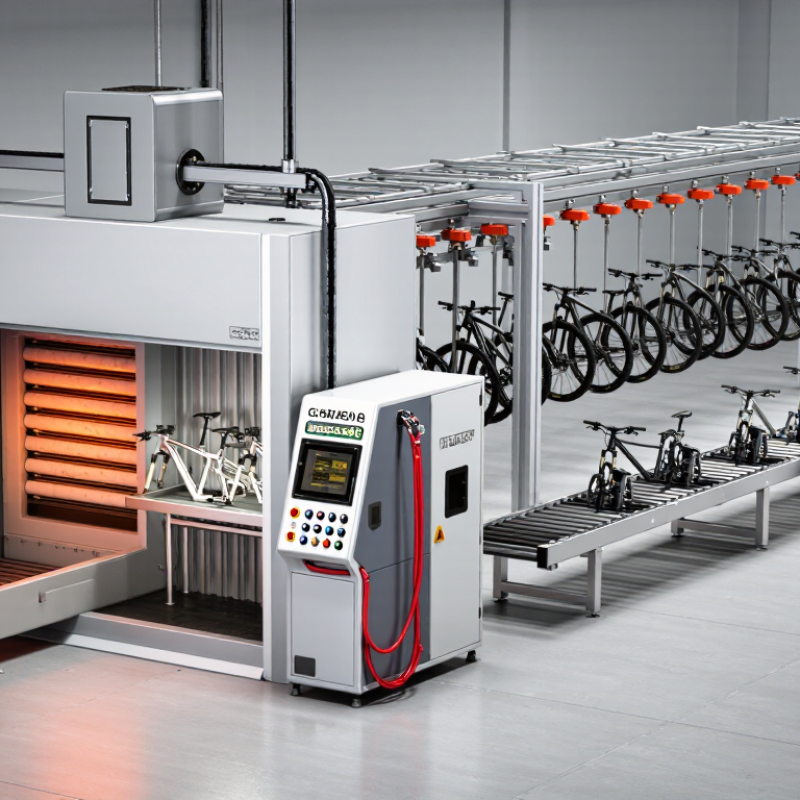
What Is Powder Coating Equipment?
What Is Powder Coating Equipment?
Powder coating equipment is a coordinated system for applying dry, charged powder to metal surfaces. It usually includes a powder spray gun, control unit, recovery system, and curing oven. The gun gives powder particles an electrostatic charge. The grounded workpiece attracts them evenly. After spraying, heat melts the powder into a smooth, protective film.
A reliable setup also needs a pretreatment line, drying area, conveyor, and ventilation system. Pretreatment removes oil, dust, and rust from the surface. Without it, even excellent powder may peel early. The curing oven must maintain stable temperature and airflow. Small temperature changes can affect gloss, adhesion, and hardness. I have found that uneven loading often causes defects, not faulty equipment. The operator still matters.
Good equipment should allow clear adjustments for voltage, powder flow, and conveyor speed. Easy cleaning is important when colors change frequently. Recovery units can reduce material waste, but they require careful filtration and maintenance. Overspray should never be treated casually. It can contaminate other colors and create slippery work areas. Powder coating is efficient, but not effortless. Some complex shapes still need slower spraying and closer inspection. Test panels help reveal problems before production pieces are affected. A simple record of temperature, line speed, and film thickness improves repeatability. Mistakes remain possible. That is why experienced technicians check the surface under strong, angled light.
China Top Powder Coating Equipment Manufacturers? - What Is Powder Coating Equipment?
| Equipment Category | Primary Function | Main Components | Typical Process Conditions | Suitable Applications | Important Selection Criteria |
|---|---|---|---|---|---|
| Powder Spray Gun | Applies charged powder particles to grounded workpieces. | High-voltage generator, electrode, powder injector, nozzle and control unit. | Electrostatic charging is commonly used; voltage and powder output are adjustable according to the coating and workpiece. | Metal panels, frames, appliances, automotive parts and general industrial components. | Transfer efficiency, coating uniformity, voltage control, ergonomics and compatibility with the powder formulation. |
| Powder Feed Hopper | Stores and supplies powder to the spray system at a consistent rate. | Fluidizing plate, compressed-air inlet, suction tube and powder container. | Dry, clean compressed air fluidizes the powder so it can be conveyed evenly. | Manual coating stations, batch production and automatic spray lines. | Stable fluidization, easy cleaning, moisture control, container capacity and powder-change time. |
| Powder Coating Booth | Contains overspray and supports powder recovery during application. | Enclosure, extraction fan, filters or cyclone separator, lighting and recovery system. | Airflow must capture overspray without disturbing the powder pattern or workpiece. | Manual booths, automatic lines and color-change production environments. | Airflow balance, filtration efficiency, cleaning access, fire safety and recovery design. |
| Powder Recovery System | Collects usable overspray to reduce material waste. | Cyclone, cartridge filters, sieving unit, reclaim container and transfer equipment. | Recovery performance depends on particle size, airflow, filter condition and powder compatibility. | High-volume production using compatible colors and powder types. | Recovery ratio, contamination control, maintenance requirements and color-change procedures. |
| Curing Oven | Melts and cross-links the applied powder to form a durable coating film. | Insulated chamber, heating system, circulation fan, temperature controller and conveyor interface. | Many thermosetting powders require a metal temperature profile around 160–200°C, depending on the formulation. | Steel, aluminum and other heat-tolerant substrates. | Temperature uniformity, effective curing time, energy efficiency, chamber size and ventilation. |
| Conveyor System | Moves workpieces through pretreatment, coating and curing stages. | Drive unit, chain or belt, hangers, rails, supports and speed controller. | Line speed is selected to provide the required pretreatment and oven residence time. | Continuous production of regularly shaped or batch-loaded parts. | Load capacity, speed range, layout flexibility, hanger design and maintenance access. |
| Pretreatment System | Removes contaminants and improves coating adhesion and corrosion resistance. | Wash stages, spray nozzles, tanks, pumps, heaters, rinses and drying section. | Process chemistry, contact time, temperature and rinsing quality vary with substrate and coating specification. | Steel, galvanized steel, aluminum and other compatible substrates. | Required corrosion performance, water treatment, chemical control, footprint and wastewater management. |
| Automatic Reciprocator | Moves spray guns in a programmed pattern to improve coating consistency. | Vertical or horizontal drive, guide system, controller, gun mounts and position sensors. | Stroke length, movement speed and gun spacing are adjusted to workpiece geometry and line speed. | High-volume lines with repeatable part shapes and automated coating requirements. | Repeatability, stroke range, synchronization, programming flexibility and ease of cleaning. |
Powder coating equipment is a coordinated system used to prepare, apply, contain, recover and cure dry coating powder. Actual operating conditions should always follow the powder manufacturer's technical data sheet, the substrate requirements and applicable workplace safety regulations.


