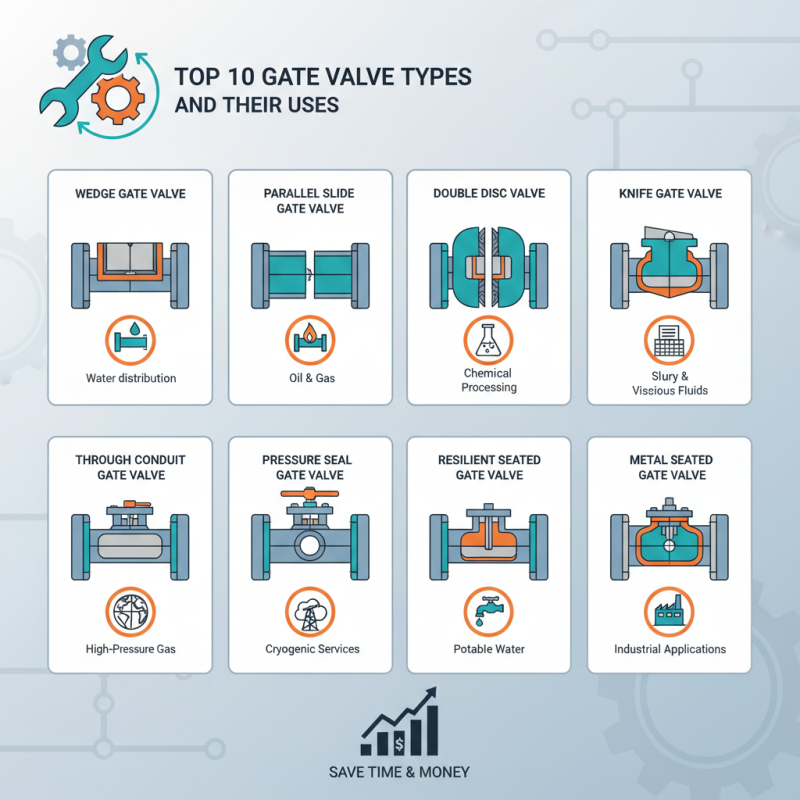
Top 10 Gate Valve Types and Their Uses Explained?
Gate Valves are essential components in many industrial applications. They control the flow of liquids and gases with precision. Understanding the different types can aid in choosing the right solution for specific needs. Each type has unique features and advantages.
In various industries, gate valves play a critical role. For example, in water distribution systems, they ensure proper flow management. In oil and gas, they handle high-pressure systems. However, not all gate valves are created equal. Some may be better suited for certain environments than others.
Selecting the right gate valve requires careful consideration. Factors like pressure, temperature, and fluid type must be evaluated. It's not always straightforward. Sometimes the choice becomes a challenge, leading to potential compromises. A detailed understanding of gate valve types can save time and money in the long run.
Top 10 Types of Gate Valves in Industrial Applications
Gate valves play an essential role in various industrial applications. They are primarily used to start or stop fluid flow in pipelines. The design allows for minimal pressure loss when fully opened. Different types cater to specific needs. Some are better for high-pressure situations, while others work well with corrosive substances.
When selecting a gate valve, consider the material. Steel, bronze, and plastic are common choices. Steel is durable and suited for high temperatures. Bronze resists corrosion, making it ideal for marine applications. However, not all materials perform well in every environment. Always evaluate your system's demands before making a choice.
Tip: Regular maintenance is key. Inspect valves periodically for leaks or wear. Corrosion can go unnoticed and lead to significant issues. Additionally, remember that not every valve fits every application. Mismatched valves can lead to inefficiencies and increased operational costs. Choose wisely.
Top 10 Gate Valve Types and Their Uses Explained
| Gate Valve Type | Material | Common Uses | Advantages | Disadvantages |
| Wedge Gate Valve | Cast Iron | Water supply, sewage treatment | Simple design, good sealing | Not suitable for throttling |
| Parallel Gate Valve | Stainless Steel | Chemical processing | Good for low-pressure applications | Less effective for high-pressure |
| Rising Stem Gate Valve | Brass | Oil and gas pipeline | Visual indication of opening | Requires more space |
| Non-Rising Stem Gate Valve | Ductile Iron | Underground piping systems | Space-saving design | Difficult to monitor position |
| Electric Gate Valve | Stainless Steel | Automated systems | Remote operation capability | Higher installation cost |
| Butterfly Gate Valve | PVC | Water supply | Compact and lightweight | Limited to specific pressures |
| Slab Gate Valve | Cast Steel | Oil and gas transport | Low flow resistance | Heavy and requires maintenance |
| Expanding Gate Valve | Alloy Steel | High-pressure applications | Excellent sealing in high pressure | Complex design |
| Double Disc Gate Valve | Plastic | Wastewater treatment | Lightweight | Can be affected by debris |
| Flexible Gate Valve | Bronze | Waterworks | Able to handle thermal expansion | Can be prone to wear |
Understanding Gate Valve Design: Materials and Construction
Gate valves are critical in various industries. Their design heavily relies on material selection and construction methods. Common materials include cast iron, ductile iron, and stainless steel. Each material has strengths suited for specific applications. Cast iron is often used for water supply lines due to its durability. Stainless steel provides excellent corrosion resistance, making it ideal for chemical processes.
The construction of gate valves typically involves a wedge-shaped disc. This design allows for a tight seal when fully closed. However, not all gate valves perform equally. Some may suffer from leakage or wear, especially in high-pressure conditions. According to industry reports, improper installation can lead to a 30% increase in failure rates. This highlights the importance of skilled professionals during installation.
Understanding the limitations of gate valve designs is crucial. Even with high-quality materials, factors like temperature and pressure can impact their effectiveness. A recent study noted that nearly 25% of gate valves failed before their expected lifespan due to environmental factors. This indicates a need for regular inspections and maintenance. Proper knowledge can enhance the longevity of these essential components.
Performance Characteristics: Flow Rate and Pressure Ratings of Valves
Gate valves are vital in managing fluid flow. Their performance directly relates to flow rates and pressure ratings. A valve’s flow rate determines how quickly fluids can pass through. A higher flow rate is essential for processes needing rapid fluid movement. However, a valve with a high flow rate may struggle under extreme pressure.
Pressure ratings indicate a valve’s ability to withstand specific pressures. Different environments require varying pressure ratings. For instance, a valve in an industrial setting typically needs to handle higher pressures. However, in residential applications, moderate ratings may suffice. It’s important to assess your specific needs.
Tip: Always check compatibility with your system. A mismatch can lead to failures.
Not every valve performs equally. Some may exceed flow expectations but fail under pressure. This can lead to leaks or operational issues. Always consider the balance between flow rate and pressure ratings.
Tip: Regular maintenance helps identify potential problems early. It extends the life of your valves and ensures reliable performance.
Top 10 Gate Valve Types and Their Flow Rate Characteristics
This chart illustrates the flow rate (in gallons per minute) and pressure ratings (in PSI) for the top 10 types of gate valves commonly used in various applications. The data reflects the performance characteristics crucial for selecting the appropriate valve type for systems requiring specific flow and pressure conditions.
Applications and Industries: Where Gate Valves are Commonly Used
Gate valves are crucial in various industries. They are there when you need to control flow. You will find them in water supply systems, oil and gas pipelines, and power plants. These valves are reliable for on/off control. They work well in high-pressure scenarios too.
In water treatment plants, gate valves ensure smooth operation. They allow large volumes of water to flow when fully opened. In chemical processing, these valves handle corrosive liquids. However, their sealing may wear over time. Regular maintenance is necessary.
Gate valves are also common in HVAC systems. They help regulate heating and cooling. In mining operations, they control slurry flow. Mistakes can occur if they’re not monitored. They may not work effectively in throttling applications. Understanding their limitations is key to proper usage.
Maintenance and Troubleshooting for Extended Valve Lifespan
Maintaining gate valves is vital for ensuring longevity and optimal performance. Regular maintenance can reduce the risk of leaks and malfunctions. The American Society of Mechanical Engineers (ASME) recommends routine inspections to detect signs of wear. These checks should occur at least once a year, depending on the valve's operating environment. Cleanliness is crucial. Removing debris helps prevent valve seizure and enhances functionality.
Troubleshooting issues promptly can significantly extend a valve's lifespan. A common issue is improper seating, which can lead to leaks. An inspection report from the Valve Manufacturers Association (VMA) states that inadequate sealing can reduce efficiency by 20%. To address seating problems, consider applying appropriate lubrication on the stem threads and ensuring proper alignment. Always check for corrosion, especially in harsh environments. Corrosion can weaken the material and lead to premature failure.
Documentation is often overlooked. Keeping detailed records of inspections and repairs fosters accountability. Statistical data supports that companies with well-maintained equipment face 30% fewer setbacks. Remember, neglecting maintenance may cost more over time. It’s not just about fixing problems but preventing them in the first place. Aim for proactive care rather than reactive fixes.