
What Are the Top Custom Stainless Steel Coil Suppliers?

Choosing among Custom Stainless Steel Coil Suppliers requires more than comparing price lists. Buyers must examine alloy accuracy, thickness tolerance, surface finish, slitting capability, minimum order quantities, and delivery reliability. A polished coil may look excellent, yet poor edge quality can disrupt stamping, bending, or automated feeding. That detail matters.

Metallurgist and corrosion specialist Dr. John C. Scully has stated, “Corrosion is an electrochemical process, and material selection must respect that reality.” His observation applies directly to supplier evaluation. A dependable supplier should explain why 304, 316L, 430, or a duplex grade suits a specific environment. The answer should reflect chloride exposure, forming requirements, temperature, and cleaning conditions.

Evidence matters more than confident promises. Ask for mill test certificates, coating or surface records, dimensional inspection data, and traceability documents. Visit the production site when practical. Review how coils are packed, labeled, and protected from moisture damage during transport. Small safeguards often reveal mature quality systems.

Still, no supplier is perfect. Lead times can shift, and technical documents may contain gaps. A strong purchasing team should question assumptions and confirm critical specifications before placing an order. This outline compares leading supplier capabilities, customization options, quality controls, certifications, pricing factors, and after-sales support. It also considers regional availability and application fit, not just online visibility. The best choice is rarely the cheapest coil. It is the supplier that delivers consistent material, clear communication, and measurable accountability.
What Are the Top Custom Stainless Steel Coil Suppliers?

What Are Custom Stainless Steel Coils?

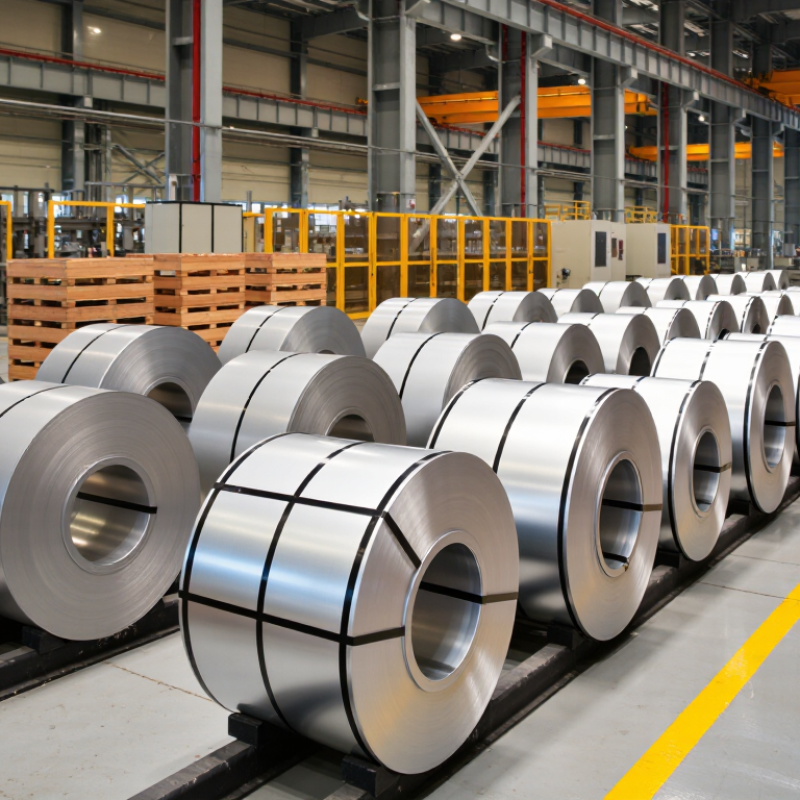
Custom stainless steel coils are made to match a specific production requirement, rather than a standard stock size. Their grade, thickness, width, surface finish, and inner diameter can all be adjusted. The metal may be supplied in narrow strips, wide rolls, or precision-slit coils. It starts with fit. A coil used for heat exchangers needs different performance from one used for medical instruments or architectural panels.

A reliable supplier should discuss the working environment before quoting a price. Engineers may review temperature, corrosion exposure, forming direction, edge quality, and expected coil weight. For example, a tight slitting tolerance can reduce waste during stamping. A controlled surface finish can also prevent visible marks after polishing. Material certificates, dimensional inspection reports, and traceable heat numbers support dependable purchasing decisions. Samples matter too. Small differences matter.

Experience shows that the cheapest coil is not always the most economical choice. Uneven edges can damage tooling. Inconsistent hardness may cause cracking during bending. A supplier with strong process control should explain how rolling, annealing, slitting, and packaging are monitored. Still, no specification sheet is perfect. Buyers should question unclear tolerances and test material under real production conditions. I would also request protective wrapping, moisture control, and a clear response plan for nonconforming coils. That practical conversation often reveals more than a polished sales page.

Which Industries Use Custom Stainless Steel Coils?

Custom Stainless Steel Coils serve industries where corrosion resistance, clean surfaces, and consistent forming matter. Food-processing equipment uses them for conveyor parts, tanks, panels, and heat-exchanger components. In washdown areas, suitable alloy selection and a smooth finish can reduce residue traps. Surface appearance alone does not prove hygienic performance. Not always. Fabricators must verify weld quality, edge condition, and cleaning procedures.

Medical-device manufacturers select narrow coils for trays, housings, springs, and precision brackets. They often control thickness tightly because small variations can affect assembly pressure. Automotive plants use custom slit coils for exhaust shields, clips, structural trim, and battery enclosures. Engineers may specify temper, yield strength, and burr limits before production. A coil that runs well on paper can still fail during stamping.

Energy and chemical facilities use corrosion-resistant coil for tubing, insulation jackets, tanks, and protective covers. Construction suppliers form it into roofing details, elevator panels, and interior trim. Electronics makers need thin, stable strip for shielding, frames, and small formed parts. Early sampling exposes problems faster than a confident specification sheet. Check the edges. Coil width, camber, flatness, and packaging deserve physical inspection. Sometimes, the cheapest tolerance becomes the most expensive rework.

Which Industries Use Custom Stainless Steel Coils?

Custom stainless steel coils are commonly specified for food-processing equipment, architectural components, automotive exhaust systems, chemical-processing equipment, and medical or pharmaceutical products. The chart compares representative stainless steel grades by their ASTM A240 minimum tensile strength. Actual grade selection depends on corrosion exposure, forming requirements, temperature, thickness, and fabrication method.

Data source: ASTM A240/A240M minimum tensile-strength requirements for representative stainless steel plate, sheet, and strip grades. Applications shown are representative industry uses, not market-share estimates.

What Services Do Custom Stainless Steel Coil Suppliers Provide?

Custom stainless steel coil suppliers do more than sell metal by weight. They translate drawings into practical specifications, including grade, thickness, width, temper, surface finish, and coil weight. According to the International Stainless Steel Forum’s 2023 statistics, global stainless steel crude production reached about 58.4 million tonnes. This scale increases the value of precise processing and reliable quality control.

Typical services include precision slitting, cut-to-length processing, edge conditioning, leveling, and surface polishing. Suppliers may also provide 2B, BA, brushed, or customized finishes for appliances, medical equipment, and architectural panels. Material testing can include chemical analysis, hardness checks, tensile testing, and dimensional inspection. Mill test certificates and heat-number traceability help buyers verify each coil’s origin and performance. Useful service, not decoration.

Packaging is another practical concern. Suppliers can use moisture-resistant wrapping, steel straps, protective corners, and export pallets for long-distance transport. Some offer just-in-time delivery, inventory holding, and small-batch production for prototypes. Market research from Grand View Research identifies construction, automotive, and industrial applications as major stainless steel demand areas, where consistent tolerances matter greatly. However, a perfect specification can still fail during forming if the supplier overlooks springback or surface direction. Buyers should request sample coils, inspection records, and clear acceptance criteria. Some suppliers promise flexibility but impose large minimum orders. That deserves scrutiny.

What Are the Top Custom Stainless Steel Coil Suppliers? - What Services Do Custom Stainless Steel Coil Suppliers Provide?
Supplier Capability Typical Custom Options Common Stainless Steel Grades Applicable Standards Value to Buyers
Custom Coil Slitting Master coils converted into narrower strips with specified widths, edge conditions, inner diameters, and outer diameters. 301, 304, 304L, 316, 316L, 409, 430 ASTM A480/A480M; EN 10088-2 Provides material in production-ready widths while reducing in-house cutting and material waste.
Precision Thickness and Width Control Thickness and width manufactured according to the purchase order, with inspection against agreed dimensional tolerances. Cold-rolled and hot-rolled stainless steel coil products ASTM A480/A480M; ASTM A240/A240M Supports stable forming, stamping, welding, and automated assembly operations.
Surface Finishing Common finishes include 2B, BA, No. 1, No. 3, No. 4, and brushed finishes, subject to grade and processing route. 304/304L, 316/316L, 430, and other commercial grades ASTM A480/A480M; EN 10088-2 Matches appearance, cleanability, reflectivity, and corrosion-resistance requirements for the application.
Edge Conditioning Mill edge, slit edge, deburred edge, or other agreed edge conditions for downstream processing. Stainless steel strip and precision slit coil Defined by purchase specification and quality agreement Helps improve handling safety and reduces interference during stamping, roll forming, and assembly.
Annealing and Pickling Heat treatment and surface cleaning used to restore ductility and remove scale generated during hot processing. 304L, 316L, 321, 347, and other austenitic grades ASTM A240/A240M; ASTM A480/A480M Improves formability and produces a cleaner surface suitable for fabrication and corrosion-service applications.
Material Certification Mill test certificates commonly identify chemical composition, mechanical properties, heat number, dimensions, and applicable specification. All grades supplied under a recognized material specification EN 10204 Type 3.1; ASTM A240/A480 Provides traceability and documentation for quality systems, audits, and regulated projects.
Mechanical and Chemical Testing Tensile strength, yield strength, elongation, hardness, chemical analysis, and dimensional inspection when specified. 304, 316, 409, 430, precipitation-hardening, and specialty grades ASTM A370; ASTM E8/E8M; ASTM E18 Confirms that supplied material meets required performance and manufacturing criteria.
Forming and Stamping Support Grade selection and delivery in conditions suited to deep drawing, bending, roll forming, or progressive stamping. 301, 304, 304L, 316L, 409, and 430 ASTM A240/A240M; ASTM A666 where applicable Helps manufacturers select suitable strength, ductility, and work-hardening characteristics.
Packaging and Export Preparation Moisture-resistant wrapping, protective paper or film, steel or wooden skids, coil eye orientation, and marked packaging. Cold-rolled, hot-rolled, slit, and polished coil products Packaging requirements defined by contract and destination regulations Reduces the risk of moisture staining, surface damage, deformation, and identification errors during transport.
Inventory and Scheduled Supply Stock programs, blanket orders, scheduled releases, minimum-order planning, and repeat-order coordination. Frequently used grades such as 304/304L, 316/316L, and 430 Customer-specific supply agreement and inspection plan Improves production continuity and can reduce the need for customers to hold large inventories.
Supplier Evaluation Criteria Relevant certifications, traceability, processing capability, dimensional control, testing resources, lead time, and documented quality procedures. Selected according to corrosion, forming, temperature, hygiene, and strength requirements ISO 9001; ASTM, EN, or customer-specific specifications Helps buyers compare qualified suppliers based on measurable technical and service capabilities rather than price alone.

How to Evaluate Custom Stainless Steel Coil Suppliers

Evaluating custom stainless steel coil suppliers requires more than comparing prices. A dependable supplier should explain alloy grades, temper, surface finish, and dimensional tolerances clearly. Ask for recent mill certificates and verify heat numbers against the coil labels. Traceability matters when a production issue appears months later.

Request a small sample before signing a large order. Measure thickness at several points, inspect the slit edges, and check the actual coil weight. A supplier may promise tight tolerances, but practical records reveal more. I once found that a visually clean coil had uneven edges after slitting. The problem was not obvious during a quick warehouse inspection.

Review production capacity, testing equipment, packaging methods, and delivery history. Suppliers serving demanding applications should provide test reports from qualified laboratories. Their engineers should discuss forming, welding, corrosion exposure, and storage conditions without vague claims. Ask how they handle nonconforming material. A written corrective-action process shows accountability.

Communication also deserves careful attention. Can the supplier confirm specifications in writing? Do they report delays early? Do invoices, certificates, labels, and packing lists match? These details seem ordinary. They prevent expensive confusion. Price still matters, but an unusually low quote may hide weaker inspection, inconsistent coating, or limited technical support. I would also recheck my own specification before blaming the supplier; unclear drawings often create avoidable disputes.

Who Are the Top Custom Stainless Steel Coil Suppliers?

The top custom stainless steel coil suppliers are specialized manufacturers, processors, and service centers with proven production records. They usually support grades such as 304, 316L, and 430. Their capabilities include precise slitting, leveling, edge trimming, and surface finishing. Experienced suppliers can match coil width, thickness, hardness, and temper to a customer’s drawings. They also explain material limits before accepting an order.

Reliable suppliers provide mill test certificates, heat numbers, inspection reports, and clear traceability. Ask how they control thickness across the coil, because small variations can affect stamping and forming. Strong suppliers use calibrated measuring equipment and documented quality procedures. Independent audits or recognized quality certifications can add confidence. However, paperwork alone is not proof of consistent performance.

Look for suppliers with flexible minimum order quantities and dependable delivery planning. A capable technical team should review tolerances, inner diameter, outer diameter, packaging, and shipping conditions. Good packaging matters. Moisture-resistant wrapping and firm steel supports can prevent damage during transport. Some suppliers offer trial coils or sample pieces, which helps verify surface quality before full production. This step is often skipped, and that can become an expensive mistake.

No supplier is perfect. A low price may hide longer lead times or limited inspection support. A premium finish may also increase waste during processing. Compare several quotations, request recent test records, and discuss how they handle nonconforming material. The best choice is usually the supplier that communicates clearly, documents its process, and understands the real demands of your application.

Blogs