China Top 10 Brass Lights Manufacturers for Global Buyers
China’s brass lighting industry has become a practical sourcing option for global buyers. Its factories combine CNC machining, hand polishing, casting, and modern electrical assembly. This combination creates diverse Brass Lights, from slim wall sconces to heavy pendant fixtures.
This guide examines ten leading Chinese manufacturers serving international projects. It considers product quality, customization, export experience, production capacity, and communication reliability. A polished sample can look impressive under showroom lighting. The real test begins later. Buyers should inspect welds, socket alignment, surface consistency, packaging, and replacement-part support.
Lighting designer Ingo Maurer once said, “I am not interested in lamps, I am interested in light.” His observation remains useful here. Brass is not merely a decorative finish. Its color changes with brushing, lacquer, aging, and exposure to air. A manufacturer’s finishing process can influence both appearance and maintenance costs.
The selected companies may suit hospitality, residential, retail, and contract projects. Some focus on handcrafted details. Others emphasize repeatable factory production and competitive minimum order quantities. Their strengths are not identical, and that matters. A supplier with excellent prototypes may still struggle with large-volume consistency.
Global buyers should verify material specifications, electrical compatibility, testing documents, lead times, and warranty terms before placing orders. Regional standards differ. Assumptions create expensive delays. This article offers a working comparison, not an unquestionable verdict. Factory visits, independent inspections, and sample testing remain valuable, especially for premium Brass Lights where small defects become highly visible.
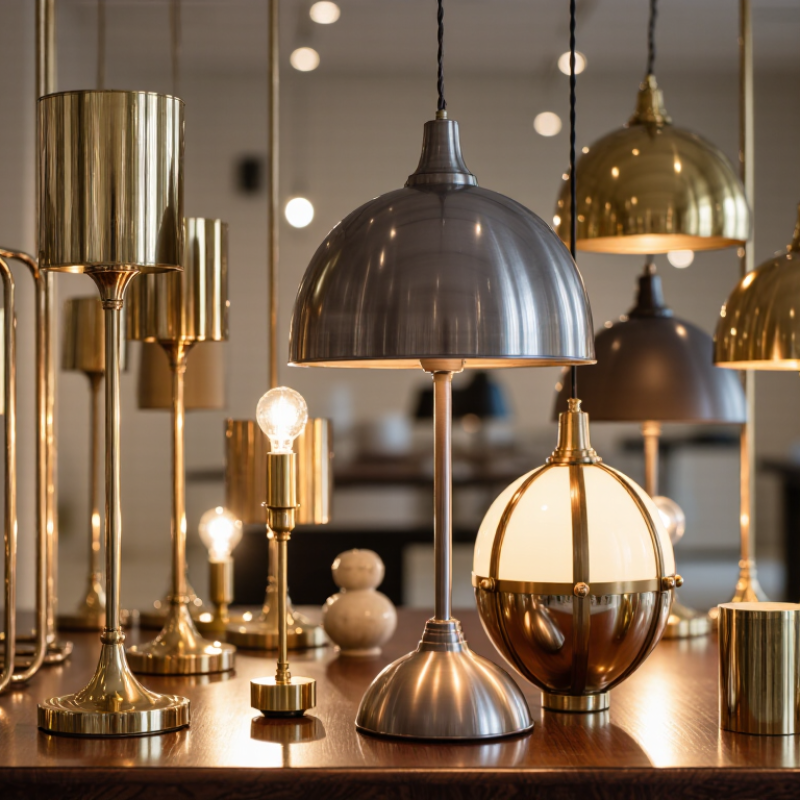
Brass Lighting Manufacturing in China: An Industry Overview
China Top 10 Brass Lights Manufacturers for Global Buyers
Brass lighting manufacturing in China combines metal forming, electrical assembly, surface finishing, and export compliance. The China Association of Lighting Industry has reported annual lighting-product exports near US$60 billion in recent years. Brass fixtures represent a smaller decorative segment, yet they benefit from China’s mature supply chain and broad component availability.
Factories commonly use brass sheet, tubes, cast parts, and CNC-machined fittings. Workers polish surfaces before applying lacquer, antique patinas, or controlled oxidation. A reliable supplier should provide material certificates, electrical test records, and sample approval documents.
Testing may include insulation resistance, grounding continuity, temperature rise, and corrosion exposure. These details matter more than showroom appearance.
The International Energy Agency estimates that lighting uses about 15% of global electricity. This pushes manufacturers toward LED compatibility, efficient drivers, and better thermal management. However, brass production still requires energy, and decorative coatings can complicate recycling. That weakness deserves attention.
Buyers should request recycled-content data, RoHS documentation, and packaging specifications before placing large orders. Quality can vary between batches, especially when hand-finishing is involved. A pre-shipment inspection remains practical. Small flaws show quickly. Checked samples reduce expensive surprises.
Key Product Categories and Customization Capabilities
Brass lighting manufacturers serving global buyers usually organize their collections around pendants, chandeliers, wall sconces, table lamps, and floor lamps. Outdoor lanterns are also gaining attention for hospitality projects. The IEA’s Energy Efficiency 2024 report states that lighting consumes about 15% of global electricity. The U.S. Department of Energy reports that LED lamps use at least 75% less energy than incandescent lamps. Therefore, brass fixtures now need both visual warmth and efficient light performance.
Customization often begins with the metal finish. Buyers can request brushed brass, aged brass, polished brass, or a darker antique tone. Surface samples matter. Digital color images can mislead. Manufacturers may also adjust shade diameter, stem length, canopy size, socket type, color temperature, dimming method, and mounting hardware. For hotel projects, suppliers should provide photometric files, insulation details, wiring options, and applicable safety documentation. IP-rated designs are essential for damp locations.
Small changes matter.
Experienced buyers should inspect a pre-production sample before approving a large order. Brass can develop slight tonal variation between batches. That is not always a defect, but it must match the agreed finish standard. Custom engraving, glass shape, cord length, and carton protection can be added, although every option increases testing and lead time. The IEA’s 2023 lighting analysis also highlights controls and efficiency as important upgrade areas, so manufacturers offering dimming compatibility and replaceable components deserve closer attention. Some suppliers still describe customization too broadly. Ask for drawings, test records, and a clear revision history.
Quality Standards, Certifications, and Production Processes
When comparing China’s top ten brass light manufacturers, global buyers should examine documented quality systems, not only polished product photos. ISO 9001 certification can indicate controlled procedures, but it does not guarantee perfect lighting products. Ask for current certificates, testing scopes, and factory audit records. Certification scope matters.
A reliable production process begins with brass verification. Suppliers should record alloy composition, sheet thickness, and component suppliers for each batch. During machining, workers check thread accuracy, joint alignment, and surface defects. After polishing and plating, coating thickness and color consistency require measurement. Salt-spray testing can reveal premature corrosion, especially on bathroom or coastal projects. Electrical assemblies need insulation, grounding, temperature-rise, and power-load tests. Market-specific approvals, such as CE, UKCA, UL, or equivalent requirements, must match the destination country.
Experienced buyers should approve a sealed sample before mass production. The factory should retain control samples, inspection photos, and serial records. Packaging tests also matter; a damaged shade can create costly delays. In practice, even strong factories sometimes miss tiny plating marks or loose terminals. A single inspection is not enough. Independent pre-shipment testing adds confidence, although it increases cost and lead time. Buyers should also review corrective-action reports, because a supplier’s response to failure often reveals more than a perfect inspection report.
Sourcing, Pricing, and Export Considerations for Global Buyers
China’s leading ten brass light manufacturers should be compared through evidence, not catalog photos. The International Energy Agency reports that lighting uses about 15% of global electricity. This makes efficient LED compatibility, heat control, and verified wattage important sourcing criteria. Ask each factory for brass composition, plating thickness, lumen data, test reports, and production photos. A sample should reveal uneven polishing, weak threads, or loose sockets before mass production begins.
Pricing depends heavily on brass weight, finish, wiring, packaging, and order quantity. As a practical RFQ benchmark, a simple brass wall light may range from 18 to 45 US dollars EXW, while larger pendant designs can exceed 70 dollars. These figures are not fixed market prices. They require confirmation against current metal costs and specifications. Grand View Research identifies continued growth in architectural and decorative lighting, but demand growth does not guarantee stable margins. Freight, inspection, mold fees, and replacement parts can change the landed cost sharply.
Export buyers should request a complete FOB or CIF quotation, carton dimensions, HS classification, lead time, and payment terms. Confirm destination-market safety testing before ordering. UL, CE, UKCA, or other approvals may apply. Factory audits are useful, yet a single audit can miss subcontracting. I have seen attractive samples followed by inconsistent finishes. That risk deserves a written tolerance standard, approved golden sample, and pre-shipment inspection. Mistakes still happen. A careful contract only makes them easier to correct.



