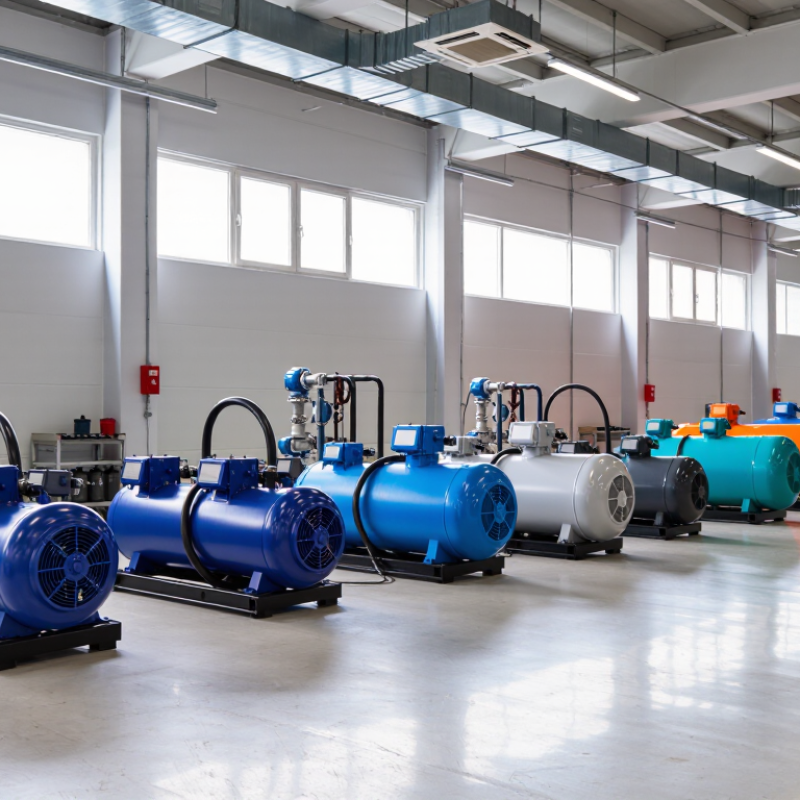
10 Best Fixed Speed Screw Compressor Manufacturers
Fixed Speed Screw Compressor selection remains a practical decision for factories that need steady airflow, predictable operation, and manageable maintenance. A fixed-speed unit runs at a constant motor speed, so it can suit sites with stable demand. But changing production schedules can leave the compressor cycling inefficiently or supplying more air than the plant needs. The right choice depends on measured demand, pressure requirements, duty cycle, and service support—not headline horsepower alone.
The U.S. Department of Energy’s Improving Compressed Air System Performance guide reports that compressed air can account for about 10% of industrial electricity use, with the share varying by facility. That makes system sizing and leak control material cost considerations. A real-world check matters: record pressure and flow during shifts, then compare the readings with each manufacturer’s published performance data. Small details count. A receiver tank, filter condition, and room ventilation can affect day-to-day results.
This guide compares 10 manufacturers of Fixed Speed Screw Compressor equipment, focusing on product range, efficiency information, reliability, and support. No single brand fits every plant. As an editorial takeaway—not a verbatim quotation from a named expert—compressed-air specialists often emphasize matching supply to measured demand. That principle deserves scrutiny, too: operating conditions change, and published figures do not replace an on-site assessment.
Definition and Operating Principle of Fixed-Speed Screw Compressors
10 Best Fixed Speed Screw Compressor Manufacturers
Definition and Operating Principle of Fixed-Speed Screw Compressors
A fixed-speed screw compressor uses an electric motor that runs at a constant rotational speed. Two interlocking helical rotors trap air between their teeth and housing. As the rotors turn, the air pocket becomes smaller. Pressure rises before discharge.
Most industrial models use oil injection. The oil seals internal clearances, removes heat, and lubricates bearings. A separator then removes oil from compressed air. The controller usually regulates output through load-unload cycles or an inlet valve. This mechanism is reliable, but it is not perfectly efficient during low demand.
The U.S. Department of Energy reports that compressed air can consume 10% to 30% of industrial electricity, depending on system conditions. That figure makes operating control important. A fixed-speed unit can perform well when demand stays stable. However, frequent unloading may waste power while the motor keeps spinning. This is where many buyers underestimate lifecycle cost.
Key Specifications: 7–13 bar(g) Pressure, Flow Rate, and Motor Power
10 Best Fixed Speed Screw Compressor Manufacturers
When comparing the 10 best fixed speed screw compressor manufacturers, pressure alone should not decide the purchase. Most industrial models cover 7–13 bar(g), but the correct setting depends on the plant’s equipment and pressure losses. A 7 bar(g) compressor may suit pneumatic tools, while packaging lines often need 10 or 13 bar(g). Higher pressure can increase energy use, even when demand stays unchanged.
Flow rate must match real consumption, not an optimistic brochure estimate. Check free air delivery in m³/min at the stated pressure, inlet temperature, and altitude. A workshop using several air tools may experience sudden peaks. A receiver tank can soften these events, but it cannot repair an undersized compressor. Motor power, measured in kW, should be reviewed with specific power and duty cycle. Fixed speed machines run efficiently near full load, yet frequent unloading may waste electricity.
Tips: Ask manufacturers for test conditions and service records. Compare sound levels, oil separation, cooling performance, and maintenance access. Leave practical capacity margin, but avoid excessive oversizing. That mistake is common. A site survey by an experienced technician can reveal leaks, wet air, or pressure drops before selection. Recheck the figures after installation; actual demand is often lower than the original estimate.
Performance Testing Under ISO 1217 and Compressed-Air Quality Under ISO 8573-1
10 Best Fixed Speed Screw Compressor Manufacturers
A fixed speed screw compressor should be judged by measured performance, not brochure claims. ISO 1217 defines testing methods for flow, pressure, shaft power, and specific power. These values should be recorded at clearly stated inlet conditions and discharge pressure. A practical test at 7 bar can expose efficiency losses hidden by ideal laboratory settings.
The U.S. Department of Energy reports that compressed air may consume 10–15% of industrial electricity. Its Compressed Air Sourcebook also estimates that leaks can waste 20–30% of compressor output. Therefore, manufacturer evaluation should include part-load behavior, unloading losses, and leak-management guidance. Energy data without operating context remains incomplete.
Air quality requires a separate check under ISO 8573-1. This standard classifies particles, water, and oil, including oil vapor. Test records should show particle counts, pressure dew point, and total oil concentration at the specified outlet. A factory may need Class 1 oil performance, yet a workshop may require a different class. Filtration must be verified after installation, not only at the compressor outlet. The British Compressed Air Society warns that poor maintenance can quickly reduce air quality and increase pressure drop. That detail is often underestimated. Even well-designed equipment can fail expectations when filters become saturated, drains stick, or sampling points are poorly selected. Performance testing is valuable, but field verification still deserves more attention.
Profiles of 10 Fixed-Speed Screw Compressor Manufacturers
Fixed-speed screw compressor manufacturers remain important where demand is steady, operating hours are long, and control simplicity matters. The International Energy Agency estimates that electric motor systems consume about half of global electricity. The U.S. Department of Energy also reports that compressed air can represent 10% to 15% of industrial electricity use. Efficiency deserves close attention.
One manufacturer profile focuses on compact units for workshops and light manufacturing. Another specializes in oil-injected compressors for continuous factory duty. A third emphasizes low-noise enclosures for indoor production areas. The fourth develops high-pressure models for packaging and process applications. The fifth supplies rugged machines for dusty environments. The sixth combines compressors with refrigerated dryers and storage tanks. The seventh targets food-processing plants, where hygienic system design matters. The eighth offers large machines for automotive assembly lines. The ninth focuses on simplified maintenance access and long service intervals. The tenth provides engineered packages for mines, utilities, and remote facilities.
What to Check Before Choosing a Manufacturer
Details matter. Check the stated free-air delivery, not only motor power. Verify performance at the plant’s actual pressure and temperature. ISO 1217 provides a recognized basis for compressor acceptance testing, while ISO 8573 helps classify compressed-air purity. A manufacturer with transparent test conditions is easier to assess. Service response also matters when a production line stops.
I would not call one profile universally best. Fixed-speed control can waste energy during low demand. That weakness is easy to overlook. Buyers should compare leak surveys, duty cycles, heat recovery options, and lifecycle costs before selecting equipment.
Comparing Efficiency, Service Networks, and Lifecycle Costs for Industrial Buyers
10 Best Fixed Speed Screw Compressor Manufacturers
For industrial buyers, efficiency is more than the rated motor output. A fixed speed screw compressor may run reliably, yet waste energy during low-demand periods. Compare specific power consumption, pressure stability, and annual operating hours. A small efficiency gap becomes expensive across a 7,500-hour production year.
Service networks deserve equal attention. Ask how quickly technicians reach your site, which parts are stocked locally, and whether remote monitoring is available. During a factory visit, check service records, oil leaks, filter condition, and control-panel alarms. These details reveal more than polished brochures. Service wins. However, response promises should be written into the contract, not accepted verbally.
Lifecycle cost includes electricity, lubricants, filters, overhaul labor, and production downtime. Request a five-year estimate using your actual load profile, tariff, and maintenance schedule. Purchase price can mislead. I have seen buyers select cheaper equipment, then lose savings through frequent shutdowns and delayed parts. Still, lifecycle models are not perfect; energy prices change, and measured demand may differ from forecasts. Leave room for uncertainty. A practical comparison should also examine motor efficiency, cooling design, warranty limits, and technician training. A compressor that operates quietly beside a clean production line is valuable, but only when its support system remains dependable.
10 Best Fixed Speed Screw Compressor Manufacturers
Comparing Efficiency, Service Networks, and Lifecycle Costs for Industrial Buyers
Energy consumption typically represents the largest portion of a compressed-air system’s lifecycle cost, often accounting for approximately 70–80%. Initial equipment investment and maintenance generally make up smaller shares. For industrial buyers, verified specific power, service coverage, spare-parts availability, and preventive maintenance capability are therefore critical evaluation factors. Actual costs vary with operating hours, pressure, load profile, electricity prices, and installation conditions.
We use cookies on our website to give you the most relevant experience by remembering your preferences and repeat visits. By clicking “Accept”, you consent to the use of ALL the cookies.
This website uses cookies to improve your experience while you navigate through the website. Out of these, the cookies that are categorized as necessary are stored on your browser as they are essential for the working of basic functionalities of the website. We also use third-party cookies that help us analyze and understand how you use this website. These cookies will be stored in your browser only with your consent. You also have the option to opt-out of these cookies. But opting out of some of these cookies may affect your browsing experience.
Necessary cookies are absolutely essential for the website to function properly. This category only includes cookies that ensures basic functionalities and security features of the website. These cookies do not store any personal information.
Any cookies that may not be particularly necessary for the website to function and is used specifically to collect user personal data via analytics, ads, other embedded contents are termed as non-necessary cookies. It is mandatory to procure user consent prior to running these cookies on your website.