
Why Choose an Automatic BOV Aerosol Filling Machine?
Why Choose an Automatic BOV Aerosol Filling Machine?
Demand for cleaner, more consistent aerosol production is reshaping modern filling lines. Grand View Research estimates that the global aerosol market could grow at a compound annual rate of about 6.6% from 2024 to 2030. Meanwhile, the European Aerosol Federation continues to emphasize quality control, safe processing, and responsible packaging throughout the product lifecycle. These trends make automation more than a speed improvement. It becomes a practical response to tighter production expectations.
An Automatic BOV Aerosol Filling Machine can meter the formulation, control propellant charging, and monitor key filling parameters with less manual variation. The bag-on-valve structure also helps separate the product from the propellant. That matters for sensitive formulations, water-based products, and applications requiring controlled dispensing. Less exposure. Cleaner handling. Better repeatability. John D. Abplanalp, a pioneer of modern aerosol packaging, described the aerosol package as “probably the most technically advanced package ever devised.” His observation still feels relevant when operators examine valve alignment, fill weight, pressure, and sealing at high speed.
Still, automation is not a magic answer. Poorly calibrated sensors, unsuitable valves, or weak process validation can create expensive defects. A reliable system requires trained operators, documented maintenance, and testing against recognized quality procedures. In practice, the value appears on the factory floor: fewer inconsistent cans, clearer production records, and steadier output during long shifts. The best choice is not always the fastest machine. It is the system that matches the formulation, container, compliance needs, and real production conditions.
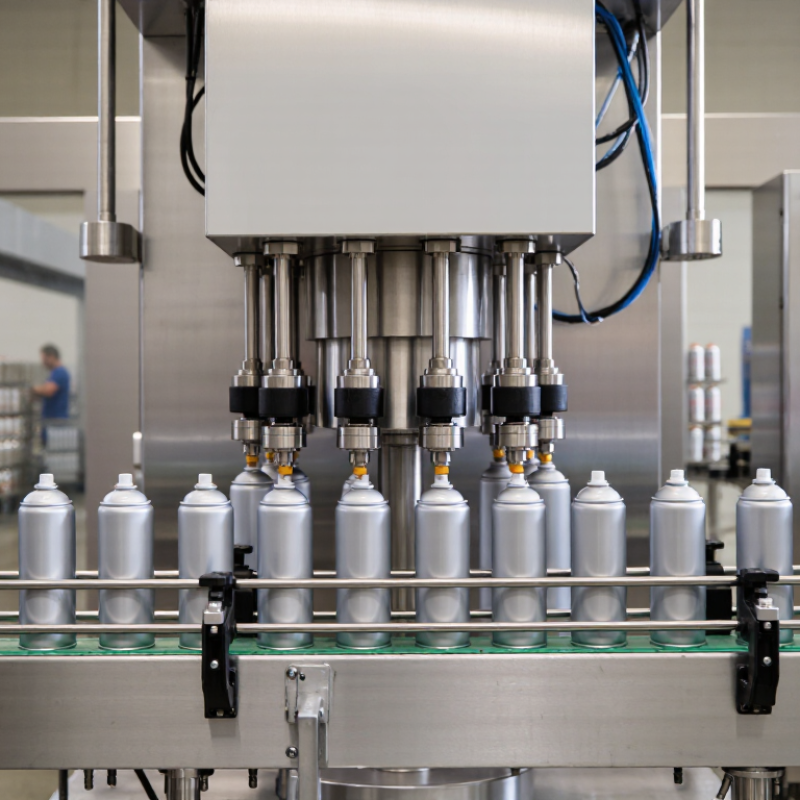
What Is an Automatic BOV Aerosol Filling Machine?
An automatic BOV aerosol filling machine is equipment designed to fill products into bag-on-valve containers. The product stays inside a flexible inner bag. Propellant remains outside the bag, creating pressure for controlled dispensing. During operation, the machine positions each container, fills the product, inserts the valve, and crimps it securely. It can also check fill weight, pressure, and container presence. Some models include conveyors, sensors, and automatic reject systems.
This process reduces manual handling and improves filling consistency. Operators can adjust the filling volume for lotions, foams, gels, and other compatible formulations. Product contact parts should be made from suitable, cleanable materials. In real production, small setup errors matter. A slightly misaligned valve may cause leakage or poor spray performance. Regular checks are still necessary, even with advanced automation. Staff should verify calibration, sealing quality, and compressed-air conditions before each run.
Tips: Match the machine with the product’s viscosity and container size. Confirm valve compatibility before purchasing. Clean contact surfaces according to a documented procedure. Keep records of fill weights and rejected units. Do not rely on speed alone; a slower, stable setting may protect quality. Testing should include storage and dispensing checks, because factory results can change after transport.
Why Choose an Automatic BOV Aerosol Filling Machine? - What Is an Automatic BOV Aerosol Filling Machine?
Key process characteristics, measurable operating factors, and practical advantages of automatic Bag-on-Valve (BOV) aerosol filling technology
| Data Dimension | Automatic BOV Aerosol Filling Machine | Typical Technical Reference | Why It Matters |
|---|---|---|---|
| Machine Definition | An integrated production system that fills a product into a flexible bag, crimps a BOV valve onto the container, and fills the propellant into the space between the bag and the can. | Product and propellant are kept physically separated by the bag. | This design helps protect the formulation from direct contact with the propellant and supports controlled dispensing. |
| Container Format | Designed for aerosol cans fitted with a compatible bag-on-valve assembly and dip tube. | Common can materials include aluminum or tinplate steel. | Container diameter, height, valve type, bag size, and neck dimensions must match the machine tooling. |
| Main Filling Sequence | Can indexing, bag or product filling, valve placement, valve crimping, propellant charging, leak testing, and discharge. | Several operations are coordinated in one continuous line. | Automated sequencing reduces manual transfers and improves repeatability between production batches. |
| Product Filling Method | The liquid, cream, gel, or other compatible formulation is filled into the bag before or during valve installation, depending on the equipment configuration. | Filling accuracy depends on pump type, product viscosity, temperature, and fill-volume setting. | Accurate product dosing supports consistent net content and reduces overfill losses. |
| Propellant Filling | Propellant is introduced after valve crimping through a dedicated charging connection or through the valve, depending on the system design. | Common propellants include compressed air, nitrogen, and other permitted gases. | Separating propellant charging from product filling maintains the basic BOV operating principle. |
| Propellant State | The propellant may be charged as a compressed gas or as a liquefied gas, subject to the formulation, package design, and applicable regulations. | Operating pressure is selected according to the product and container specifications. | Pressure selection affects spray performance, residual product, package safety, and dispensing consistency. |
| Dose Control | Electronic or pneumatic controls coordinate pump strokes, filling time, valve position, and propellant charging parameters. | Setpoints are normally verified by weighing samples or by validated in-process checks. | Closed-loop or regularly verified control helps maintain consistent fill weights throughout a production run. |
| Valve Crimping | A crimping station mechanically fixes the BOV valve to the can and forms a seal around the valve cup. | Crimp diameter, crimp depth, and sealing condition are critical parameters. | A correct crimp helps prevent leakage and ensures that the valve can withstand the internal operating pressure. |
| Leak Testing | The line can include pressure holding, water-bath, vacuum, or other validated leak-detection methods suited to the package. | The selected test method must be validated for the container, valve, and product combination. | Leak testing is an important safety and quality-control step for pressurized aerosol packaging. |
| Production Capacity | Capacity varies with the number of filling heads, can size, product viscosity, filling volume, indexing pitch, and inspection requirements. | Manufacturers commonly specify output in cans per minute rather than using one universal capacity value. | Actual output should be evaluated using the intended container, formulation, and required quality checks rather than a headline speed alone. |
| Filling Accuracy | Accuracy is influenced by the metering pump, product homogeneity, temperature stability, valve condition, and calibration procedure. | The acceptable tolerance must be defined by the product specification and applicable metrology requirements. | A documented calibration and verification plan is more meaningful than a single nominal accuracy figure. |
| Automation Level | Automatic systems can integrate feeding, filling, crimping, gas charging, inspection, reject handling, and accumulation conveyors. | The exact configuration ranges from semi-automatic modules to fully integrated lines. | Higher integration can reduce operator intervention, but it may require greater capital investment and maintenance expertise. |
| Labor Requirement | Operators typically supervise material loading, parameter control, quality checks, sanitation, and routine maintenance instead of manually performing every filling step. | Labor savings depend on line layout, automation scope, and local operating practices. | Reduced manual handling can improve production consistency and help limit handling-related contamination risks. |
| Product Compatibility | BOV systems can be used for many water-based, oil-based, personal-care, household, food, pharmaceutical, and industrial formulations when material compatibility has been confirmed. | Compatibility must be checked for the product, bag film, valve elastomers, can coating, and propellant. | Material compatibility testing helps prevent swelling, permeation, corrosion, chemical degradation, and loss of performance. |
| Product Protection | The product remains inside the bag and is separated from the propellant and, during use, from much of the outside atmosphere. | The protection level depends on bag material, valve design, formulation, and package integrity. | This configuration can help reduce oxidation or contamination concerns for suitable formulations. |
| Dispensing Performance | The propellant applies pressure to the outside of the bag, pushing the product through the valve and actuator. | Output pattern depends on the valve, actuator, formulation rheology, and internal pressure. | A properly matched package can provide controlled dispensing across a broad portion of the product's usable life. |
| Residual Product | The flexible bag can collapse as product is dispensed, helping the package use a high proportion of its contents. | Actual residual content varies with formulation viscosity, bag geometry, valve design, and orientation during use. | Lower residual content can improve consumer value and reduce unused product waste, but it must be measured through testing. |
| Cleaning and Changeover | Product-contact parts may require flushing, dismantling, or validated cleaning between products or batches. | Changeover time depends on the filling circuit, product viscosity, hygiene requirements, and tooling. | Accessible sanitary design and documented changeover procedures help reduce downtime and cross-contamination risk. |
| Safety Controls | Typical safeguards include guarding, emergency stops, pressure monitoring, interlocks, controlled gas supply, and fault alarms. | The system should be designed and operated in accordance with applicable pressure-equipment, machinery, and aerosol regulations. | Safety functions help control risks associated with pressurized containers, moving equipment, and flammable or high-pressure gases. |
| Quality Documentation | Useful records include batch settings, fill-weight checks, crimp measurements, leak-test results, rejected units, and maintenance activities. | Electronic data collection may be added where traceability requirements justify it. | Recorded process data supports troubleshooting, release decisions, audits, and continuous improvement. |
| Best-Fit Applications | Suitable for repeat production of products that benefit from product–propellant separation, controlled dispensing, or reduced direct atmospheric exposure. | Final suitability depends on formulation testing, package qualification, and regulatory approval. | An automatic BOV line is most valuable when consistent output, product protection, and scalable production are important. |
Technical note: Capacity, filling tolerance, pressure, material compatibility, and safety requirements are application-specific. They should be confirmed through equipment trials, package qualification, process validation, and compliance with the regulations applicable to the target market.


