
7 Best Clay Graphite Crucibles for Global Buyers?

Choosing among the 7 Best Clay Graphite Crucibles for Global Buyers requires more than comparing prices. A crucible may look identical online, yet behave differently beside a glowing furnace. Density, clay purity, graphite content, wall thickness, and firing quality all influence service life.

Professor I-Wei Chen, a recognized ceramics researcher, has noted, “Processing history often matters as much as composition.” This principle fits every Clay Graphite Crucible evaluation. A well-formulated body can still fail after uneven firing or careless storage. Small cracks matter.

This guide examines seven practical options for foundries, laboratories, jewelry workshops, and non-ferrous metal producers. Each selection considers thermal shock resistance, maximum working temperature, metal compatibility, pouring stability, and supplier consistency. Product documentation also matters. Buyers need clear dimensions, packing details, and replacement guidance.

The best crucible is not always the thickest one. Nor is the cheapest option truly economical when it fails after three melts. That lesson is easy to overlook.

We also recognize a limitation: performance depends on furnace design, fuel atmosphere, operator habits, and heating speed. A crucible that performs well in a gas-fired furnace may disappoint inside an electric unit. Therefore, the ranking should support careful comparison, not blind purchasing.

Expect practical details, honest trade-offs, and a few conclusions that deserve further checking. Global buyers need dependable evidence, not polished claims alone. A reliable Clay Graphite Crucible should match the metal, furnace, workload, and handling routine.
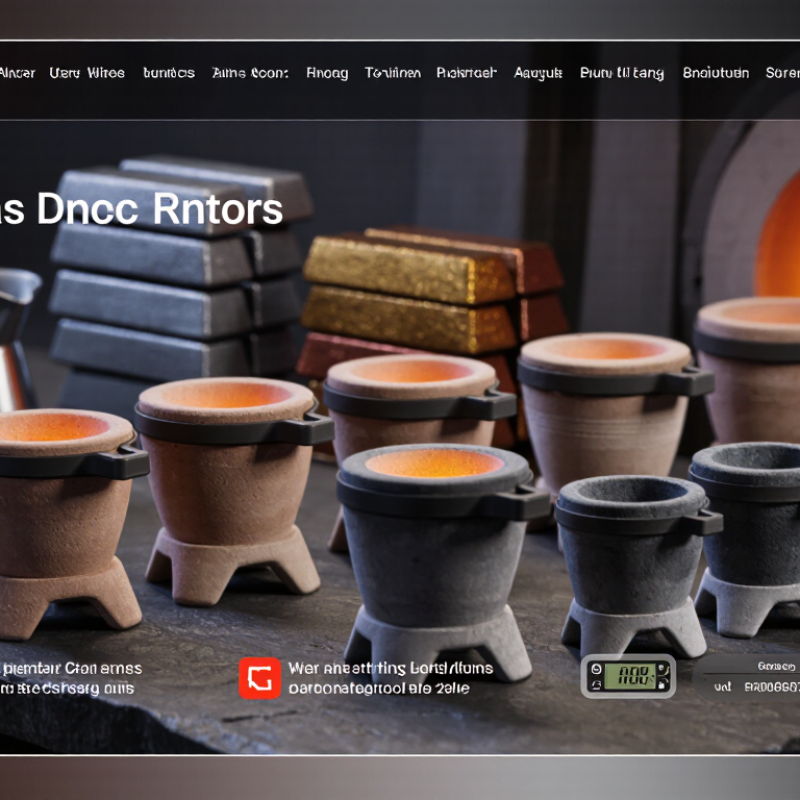
7 Best Clay Graphite Crucibles for Global Buyers?

What Are Clay Graphite Crucibles and How Are They Used?

Clay graphite crucibles combine natural graphite with refractory clay. This structure tolerates intense heat and repeated melting cycles. They are commonly used for melting aluminum, copper, brass, and other non-ferrous metals. Inside a furnace, the crucible holds metal while reducing direct contact with combustion gases. Graphite also helps spread heat evenly. The clay binder provides shape and mechanical strength.

Their performance depends on more than temperature rating. Heating rate, alloy chemistry, furnace atmosphere, and handling methods all matter. A crucible may crack when placed into a cold furnace and heated too quickly. Moisture creates another serious risk. Store crucibles in a dry area, then preheat them according to the supplier’s technical instructions. Inspect the wall, rim, and base before every melt. Small surface damage can develop into a sudden failure. That detail is easy to overlook. Buyers should compare capacity, dimensions, wall thickness, porosity, and resistance to oxidation. Local furnace clearance also matters. A technically excellent crucible can still be unsuitable if it fits poorly.

Tips: Match the crucible to the metal and furnace fuel. Avoid scraping solidified metal aggressively. Use suitable lifting tools and heat-resistant protective equipment. Keep a usage record, including melt temperature, cycle count, and visible wear. This record improves replacement timing, although it will not predict every failure. When comparing international suppliers, request test data, inspection details, packaging standards, and clear operating guidance.

Key Criteria for Comparing the Seven Best Crucible Options

7 Best Clay Graphite Crucibles for Global Buyers?

Comparing seven clay graphite crucible options requires more than checking listed capacity. In practical furnace work, thermal shock resistance often matters most. A crucible with balanced clay and graphite can survive repeated heating and cooling. However, higher graphite content does not automatically mean better performance. Buyers should review material composition, apparent density, wall thickness, and stated maximum temperature. A 5-kilogram crucible may suit small casting work, while larger models need stronger rims and stable bases. Inspect the pouring lip closely. Small defects can cause uneven flow and metal loss.

The seven options can be compared by application: laboratory testing, non-ferrous melting, frequent production, emergency replacement, and long-distance shipping. Check oxidation resistance when the crucible operates in an open furnace. Also examine dimensional consistency between batches. This detail is often ignored. Ask suppliers for test reports, heat-cycle data, packing methods, and storage instructions. Export buyers should confirm dimensions, net weight, pallet protection, and documentation before ordering. A low purchase price may become expensive after breakage during transport. Availability of replacement sizes also affects long-term reliability.

Tips: Preheat gradually. Avoid sudden temperature changes. Keep crucibles dry and inspect every surface before use. Compare at least three samples, not only catalogs. My own preference would be a slightly thicker wall for uncertain shipping conditions, although it may reduce heating speed. That trade-off deserves a real test.

7 Best Clay Graphite Crucibles for Global Buyers? - Key Criteria for Comparing the Seven Best Crucible Options

Option Recommended Capacity Class Typical External Size Typical Graphite Content Common Working Temperature Suitable Metals Heating Compatibility Thermal Shock Resistance Pouring Design Best Use Case Key Buying Consideration
1. Small General-Purpose Crucible 0.5–2 kg of copper-equivalent metal Approx. 90–140 mm diameter; 100–170 mm height 30–45% graphite by weight is typical 1,200–1,400°C in routine operation Aluminium, brass, bronze, copper and precious-metal alloys Gas furnace, electric resistance furnace and small induction furnace Good Simple rim; optional pouring lip Small foundries, laboratories, jewellery work and prototyping Confirm actual metal capacity because supplier capacity ratings may use different metal densities
2. Medium Multi-Metal Crucible 2–5 kg of copper-equivalent metal Approx. 140–210 mm diameter; 170–260 mm height 35–50% graphite by weight is typical 1,250–1,450°C in routine operation Aluminium, copper alloys, zinc alloys and selected cast irons Gas, oil-fired, electric resistance and induction furnaces Good to very good Reinforced rim with optional pouring spout General-purpose non-ferrous melting and maintenance work Balance wall thickness, heating speed and working volume rather than choosing by outside dimensions alone
3. Large Foundry Crucible 10–25 kg of copper-equivalent metal Approx. 250–380 mm diameter; 300–480 mm height 35–50% graphite by weight is typical 1,200–1,400°C in routine operation Aluminium, brass, bronze and copper-based foundry alloys Gas-fired, oil-fired and suitably sized electric furnaces Good when preheated correctly Heavy rim; lifting tongs or pouring shank normally required Production casting and batch melting Check lifting equipment, furnace clearance, base support and empty-crucible weight before purchase
4. Induction-Furnace Clay Graphite Crucible 2–15 kg of copper-equivalent metal Approx. 150–300 mm diameter; 180–380 mm height 30–45% graphite by weight is typical 1,200–1,500°C, depending on furnace frequency and power Aluminium, brass, bronze, copper and some ferrous alloys Medium- and high-frequency induction systems Very good with controlled ramp-up Usually straight-sided or slightly tapered for coil clearance Fast melting where temperature control and repeatability are important Verify electrical compatibility, coil clearance, crucible wall profile and minimum operating fill level
5. Pouring-Lip Crucible 1–8 kg of copper-equivalent metal Approx. 120–250 mm diameter; 150–320 mm height 30–45% graphite by weight is typical 1,200–1,400°C in routine operation Aluminium, brass, bronze and other non-ferrous alloys Gas, electric resistance and small induction furnaces Good Integrated pouring spout for controlled discharge Manual pouring, educational workshops and small-batch casting Inspect the lip geometry and balance; a convenient spout does not replace correct lifting tools
6. High-Graphite, Low-Porosity Crucible 1–10 kg of copper-equivalent metal Approx. 120–270 mm diameter; 150–340 mm height 40–55% graphite by weight is typical 1,250–1,500°C in routine operation Aluminium, copper alloys, precious-metal alloys and repetitive non-ferrous melts Gas, electric resistance and induction furnaces Very good Smooth rim; pouring lip may be available Frequent melting cycles and applications requiring reduced metal wetting Prioritize apparent density, porosity, glaze quality and resistance to flux attack
7. Heavy-Duty Reinforced Clay Graphite Crucible 5–20 kg of copper-equivalent metal Approx. 210–350 mm diameter; 250–440 mm height 30–45% graphite with mineral reinforcement commonly used 1,200–1,450°C in routine operation Brass, bronze, copper alloys, aluminium and selected iron-melting applications Gas-fired, oil-fired and industrial electric furnaces Very good under mechanical handling Thickened rim and reinforced base; tongs or shank recommended Industrial environments with repeated loading, handling and thermal cycling Compare wall thickness, base strength, carrying method and resistance to slag or flux corrosion

Note: The figures above are representative industry ranges for clay-graphite crucible types, not brand-specific specifications. Actual capacity, service life and maximum temperature depend on crucible geometry, furnace atmosphere, heating rate, metal alloy, flux selection, preheating and handling practices.

Seven Clay Graphite Crucibles for Different Melting Applications

For global buyers, the best clay graphite crucible depends on the melting application, furnace design, and alloy chemistry. The USGS Mineral Commodity Summaries 2024 reported approximately 1.6 million metric tons of natural graphite production in 2023. This supply remains geographically concentrated, so material consistency deserves attention.

Seven practical options cover different needs. A small laboratory crucible suits sample testing and precious-metal research. A medium general-purpose crucible fits aluminum and copper alloy batches. A large foundry crucible supports repeated production melts. A high-purity grade helps reduce contamination in sensitive alloys. A silicon-carbide-reinforced clay graphite crucible offers improved thermal shock resistance. A spouted crucible provides cleaner, controlled pouring. An induction-rated crucible is designed for electromagnetic furnace conditions, but compatibility must be verified carefully.

The International Aluminium Institute reported global primary aluminum production above 70 million tonnes in 2023, showing the scale of nonferrous melting operations. Yet capacity alone should not guide purchasing. Check maximum working temperature, wall uniformity, porosity, base stability, and heating-cycle instructions. Preheating remains critical. Small cracks can become serious during rapid heating. A larger crucible is not automatically better. In practice, published service-life claims are difficult to compare because furnace habits differ. That is worth questioning. Request test data, inspection records, and application-specific guidance before ordering.

How to Match Crucible Design With Metal, Furnace, and Temperature

Choosing among the seven best clay graphite crucibles starts with the metal, not the catalog photograph. Copper and brass transfer heat quickly, so a dense crucible with steady thermal conductivity helps limit hot spots. Aluminum needs careful preheating because its low melting temperature can expose poor burner control. For cast iron, select a heavier wall and confirm the crucible’s rated temperature margin. Small details matter.

Furnace design changes the decision. A gas furnace may create uneven flame contact, while an electric furnace usually offers gentler, more uniform heating. Measure the chamber before ordering. A crucible needs clearance around its sides and base. Check lifting tongs, pouring height, and lid fit too. In daily use, I inspect for hairline cracks after every cooling cycle. I once treated a minor surface mark as harmless. The next heating cycle proved that assumption wrong.

Temperature ratings should be read with the alloy, atmosphere, and heating speed in mind. Do not operate continuously at the published limit. Leave a practical safety margin, especially during repeated melts. Keep the crucible dry, warm it gradually, and avoid sudden contact with cold tools. Record melt time, charge weight, and visible wear. These notes improve future selection, although they cannot replace technical data. Performance also depends on handling, and many purchasing comparisons overlook that factor.

Clay graphite crucibles are commonly selected for non-ferrous metals because they combine thermal conductivity with resistance to thermal shock. Match the crucible design to the metal’s melting point, furnace atmosphere, heating method, and required pouring temperature. The values below are approximate melting points; actual furnace settings must also allow for superheat and heat loss.

Global Buying Factors: Quality, Certification, Shipping, and Cost

Global buyers should judge the seven best clay graphite crucibles by application, not appearance. Useful options include standard melting, high-density, silicon-carbide reinforced, low-ash, thermal-shock resistant, large-capacity, and laboratory-grade models. Ask for graphite percentage, apparent porosity, bulk density, and maximum working temperature. ISO 9001 certification supports controlled manufacturing, but it does not prove crucible performance. Request batch-level test reports instead.

Certification needs careful reading. A reliable supplier should provide chemical composition, thermal cycling results, dimensional tolerances, and a clear usage guide. ASTM-based testing can improve comparison, although standards may differ by region. RoHS documentation can support restricted-substance compliance, but it is not a melting-performance certificate. I have seen buyers accept a generic certificate and later discover unexpected cracking. That mistake is expensive.

Shipping is another quality issue. UNCTAD reports that over 80% of global trade by volume moves by sea, so freight delays can affect production schedules. Use reinforced export cartons, moisture barriers, corner protection, and visible batch labels. Compare landed cost, not unit price. Include freight, insurance, duties, breakage allowance, and replacement lead time. The cheapest quotation may become the costliest shipment. Before ordering, test a small batch with your actual alloy, furnace cycle, and loading method. Seven choices remain only a shortlist until real operating data confirms them.

Blogs