
What Are the 2026 Top Red Light Therapy Bed Types?

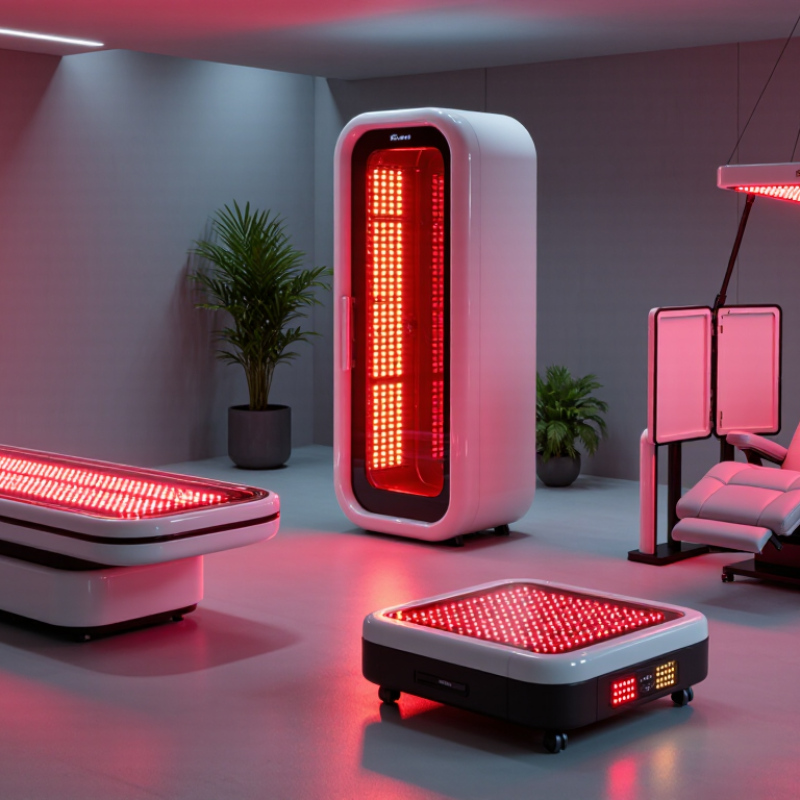
Red light therapy is moving from niche wellness studios into dermatology clinics, recovery centers, and premium home spaces. The Red Light Therapy Bed now appears in several designs, including horizontal full-body beds, vertical booths, modular panel systems, and hybrid infrared platforms. Each type creates a different experience. A client may lie beneath hundreds of LEDs, stand inside a narrow booth, or adjust panels around the shoulders and legs.

Industry reports show why this category deserves careful comparison. Grand View Research’s Red Light Therapy Market Size, Share & Trends Analysis Report identifies strong market expansion through 2030, driven by wellness adoption and non-invasive cosmetic applications. Fortune Business Insights reports similar growth expectations, while noting differences in market definitions and product classifications. That matters. A market forecast is not clinical proof.

Professional selection requires more than counting LEDs. Buyers should examine wavelength ranges, irradiance, treatment distance, session controls, cooling, electrical safety, and manufacturer testing. The U.S. Food and Drug Administration distinguishes general wellness products from devices making medical claims. Therefore, “FDA cleared” should never be treated as a universal quality guarantee.

Some beds look impressive. Their specifications may be incomplete. This guide compares the leading 2026 bed types through practical use, engineering details, maintenance needs, and evidence quality. It also considers user comfort, room size, operating cost, and realistic treatment expectations. The strongest option may not be the most expensive model. It may be the one with transparent measurements, consistent output, and safer daily operation. Even this framework has limits, because independent testing remains uneven across the industry.
What Are the 2026 Top Red Light Therapy Bed Types?

2026 Red Light Therapy Bed Taxonomy: Panels, Pods, Canopies, and Hybrids

What Are the 2026 Top Red Light Therapy Bed Types?

The 2026 taxonomy is clearer when organized by structure: panels, pods, canopies, and hybrids. Panels expose the body from one or several fixed surfaces. They are easier to install, inspect, and measure. However, treatment may feel uneven around the sides and back. Pods surround the user more completely, creating a controlled chamber-like experience. They usually demand more space, cleaning, and careful ventilation. Simple, but incomplete.

Canopies sit above the user, often covering the torso while leaving the sides open. They suit clinics and homes with limited floor space. Their main weakness is shadowing, especially around the shoulders and arms.

Hybrid beds combine panels, canopy sections, and sometimes targeted lower-body lighting. This design improves coverage, but more emitters can complicate dose control.

The International Electrotechnical Commission’s IEC 62471 framework supports photobiological safety assessment for lamps and light-emitting systems.

Market evidence supports cautious growth rather than instant certainty. Grand View Research estimated the global photobiomodulation market at approximately 1.1 billion dollars in 2023, with continued expansion through 2030. Separate 2024 industry assessments also identify wellness clinics and home devices as major demand areas. Yet market size does not prove clinical effectiveness.

Buyers should request wavelength ranges, irradiance at skin level, exposure time, and independent testing.

A bright bed is not automatically a better bed. In practice, coverage and measured dose often matter more than dramatic appearance.

630–660 nm Red Light and 810–850 nm NIR Bed Categories

What Are the 2026 Top Red Light Therapy Bed Types?

In 2026, red Light Therapy Beds are commonly grouped by their dominant wavelength range:visible red, near-infrared, or dual-spectrum systems. Beds centered around 630–660 nm deliver red light close to the skin surface. They are often selected for cosmetic routines and localized surface care. The glow is warm, but warmth should not be confused with treatment intensity.

Beds using 810–850 nm near-infrared light are designed for deeper photon penetration. Users may choose them for muscles, joints, or recovery-focused sessions. Yet penetration varies with tissue, angle, irradiance, and distance. Wavelength alone does not prove performance.

A reliable comparison checks measured output, session timing, ventilation, panel coverage, and eye-safety instructions. In practical evaluations, even coverage matters. Dark gaps can create uneven exposure.

Dual-spectrum beds combine 630–660 nm red light with 810–850 nm NIR light. This category suits users seeking skin-facing and deeper exposure in one session.

Research remains mixed for some outcomes, and individual responses differ. That matters. Start with conservative sessions and record skin comfort, redness, soreness, and recovery.

People taking photosensitizing medicines or managing light-sensitive conditions should seek qualified medical advice.

I would not rank every dual-spectrum bed above a single-band model. Design quality and honest specifications may matter more than a crowded wavelength list.

The distinction is useful, but imperfect.

Irradiance and Dose: Compare Beds at 10–100 mW/cm² and 20–60 J/cm²

What Are the 2026 Top Red Light Therapy Bed Types?

Irradiance and Dose: Compare Beds at 10–100 mW/cm² and 20–60 J/cm²

In 2026, leading red light therapy beds generally fit three designs. Full-body flat beds provide even coverage while users lie comfortably. Vertical beds save space and support quick standing sessions. Adjustable beds combine multiple panels, allowing closer control of distance and body position. The most useful choice depends on measured output, not appearance.

Irradiance describes power reaching each square centimeter. Dose describes the total energy delivered during a session. The basic calculation is simple: dose equals irradiance multiplied by time.

10 mW/cm²
20 J/cm² requires about 33 minutes.
100 mW/cm²
The same dose takes roughly three minutes.

A 60 J/cm² target ranges from about 100 minutes at 10 mW/cm² to 10 minutes at 100 mW/cm². That difference changes comfort, scheduling, and heat management.

Reliable comparison requires measurements at skin level, not only advertised panel output. Distance matters. So do sensor angle, wavelength, and calibration quality. In practical testing, adjustable beds often make dose control easier because users can change spacing.

Still, a neat specification table can mislead. I would record session time measured irradiance skin warmth and tolerance after each use.

Higher output is not automatically better, and published figures may vary between devices. Follow the supplied exposure guidance, especially when using a bed for the first time.

Horizontal Versus Vertical Beds: Coverage, Comfort, and Session Efficiency

What Are the 2026 Top Red Light Therapy Bed Types?

Horizontal and vertical red light therapy beds serve different practical needs. Horizontal beds support a relaxed, full-body position, which can feel useful after exercise or during a longer session. However, the back and sides may receive less direct light if the body creates shadows. Repositioning can improve coverage, but it also interrupts the session.

Vertical beds allow users to stand between light panels, often exposing the front, back, and sides with fewer position changes. They may use space efficiently in busy studios and can shorten preparation time. Standing is not comfortable for everyone, especially during a session lasting several minutes. A nearby support rail may help, but it should not replace proper supervision.

Coverage depends on panel spacing, wavelength, irradiance, and the manufacturer’s instructions. More light is not automatically better. I recommend checking the stated treatment distance and using suitable eye protection when advised. Horizontal designs usually win on comfort. Vertical designs often win on access and movement. Neither type guarantees better results for every person.

In practical comparisons, comfort can influence consistency more than technical specifications. I have noticed that users sometimes choose a bed because it feels relaxing, then overlook uneven exposure. That preference can mislead. A careful evaluation should consider body position, session length, ventilation, cleaning procedures, and the ability to follow safety guidance. Evidence continues to develop, so realistic expectations remain important.

Safety Benchmarks: FDA Clearance, IEC 62471, and Eye-Protection Standards

Red light therapy beds now include flat panels, full-body beds, and canopy systems. The Global Wellness Institute valued the global wellness economy at 6.3 trillion dollars in 2023. That growth increases consumer interest, but it also raises safety questions.

FDA clearance should not be treated as blanket approval. A 510(k) clearance usually indicates substantial equivalence to an existing device. It does not prove that every setting is safe for every user. Buyers should request the clearance number, irradiance range, treatment distance, and recommended exposure time. FDA’s medical-device framework supports this verification step.

IEC 62471 assesses photobiological risks from lamps and LED systems. Ask for the device’s risk-group classification, wavelength data, and testing laboratory. Eye protection must match the emitted spectrum. Dark glasses alone may offer little protection. A credible supplier should provide transmission curves, fit guidance, and instructions for users with light-sensitive conditions. The ICNIRP guidelines also emphasize exposure duration, irradiance, and viewing distance, not brightness alone.

Keep eyes closed when instructed. Never assume “red” means harmless. Some beds include near-infrared output, which may be invisible but still reaches ocular tissue. A practical review should inspect uncomfortable glare, missing labels, and unclear timers. I would still question any report lacking raw measurements. Safety paperwork can look impressive while leaving important gaps.

Blogs