2026 Top Instant Noodle Producing Machine for Global Buyers?
Choosing the right Instant Noodle Producing Machine in 2026 requires more than comparing online prices. Global buyers must examine output, product consistency, energy use, maintenance, and local service support. A machine may promise high capacity, yet perform poorly with unstable flour quality or frequent voltage changes. That matters.
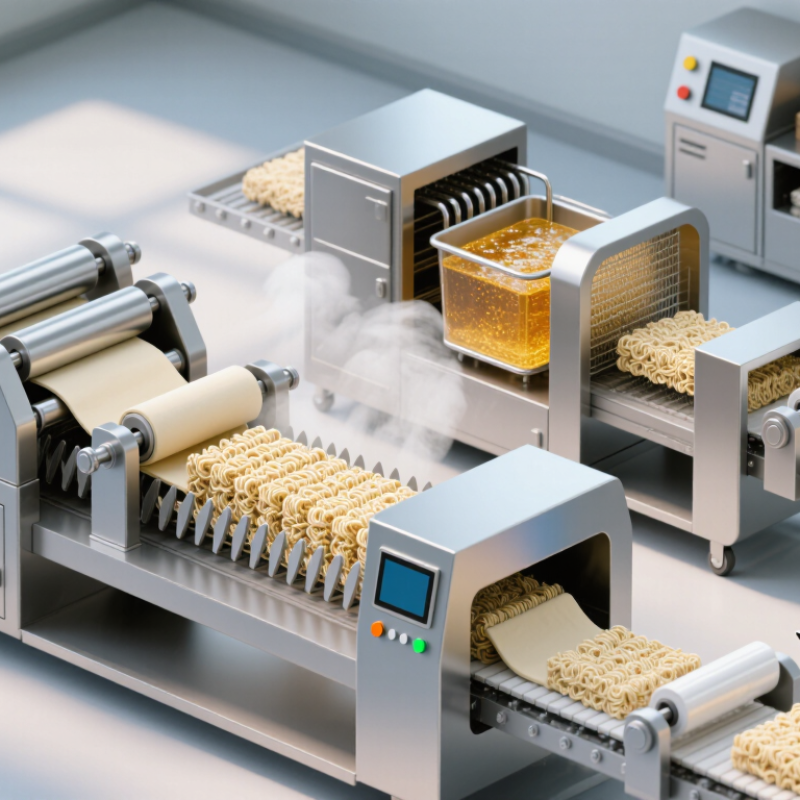
This guide approaches the subject through practical manufacturing experience and technical evaluation. It considers dough mixing, sheeting, steaming, cutting, frying or drying, cooling, and final packaging. Details matter. Stainless-steel contact surfaces should be easy to clean. Steam temperature must remain stable. Noodle blocks should leave the line evenly formed, without excessive breakage. Buyers should also check whether the supplier provides installation training, spare parts, electrical documentation, and clear warranty terms.
Momofuku Ando, the founder of Nissin Foods and a pioneering instant noodle developer, said, “Peace will come to the world when the people have enough to eat.” His words connect production technology with a basic human need. However, automation alone does not guarantee responsible growth. A larger line can increase waste when operators lack training. A cheaper fryer may create higher energy costs later. That assumption deserves questioning.
This overview highlights leading machine options for international buyers while recognizing an uncomfortable truth: specifications on paper can hide operational weaknesses. Factory visits, sample testing, and verified customer references remain valuable. Buyers should request production trials using their own flour, seasoning format, package size, and target noodle texture. The best Instant Noodle Producing Machine is not always the fastest model. It is the one that delivers dependable quality, manageable costs, and safer daily operation.
Global Demand Baseline: 120.42 Billion Servings in 2023 (WINA)
2026 Top Instant Noodle Producing Machine for Global Buyers?
The demand baseline is already enormous. The World Instant Noodles Association reported 120.42 billion servings consumed worldwide in 2023. This figure reflects actual demand, not a speculative forecast. It includes household purchases, retail sales, and foodservice consumption. For equipment buyers, the message is clear: reliable capacity matters. The fastest machine is not always the best choice.
WINA’s global demand statistics should be read with regional context. Eating habits, package sizes, and seasoning preferences differ sharply between markets. PMMI’s 2024 packaging automation research also highlights flexibility, labor efficiency, and hygienic design as major investment drivers. A suitable 2026 production line should support stable dough sheeting, accurate cutting, controlled steaming, and consistent frying or drying. Quick format changes are valuable. So is easy cleaning.
Small details affect real output. Oil temperature recovery, noodle weight variation, sealing accuracy, and dust control deserve factory testing. Buyers should request production samples, energy data, spare-parts plans, and sanitation procedures. A line rated for high output may perform poorly with frequent changeovers. That is an uncomfortable point. I would not trust catalog speed alone. Trial runs reveal more than polished specifications. WINA’s 120.42-billion-serving baseline supports investment, but local demand must still determine the final machine configuration.
Machine Types Compared: Fried, Air-Dried, Cup, and Block Lines
2026 Top Instant Noodle Producing Machine for Global Buyers?
For 2026 buyers, machine selection should match product format, energy costs, and local eating habits. The World Instant Noodles Association reported 123.1 billion servings consumed globally in 2023. Fried lines create a familiar texture through rapid oil cooking. They require filtration, heat recovery, and reliable moisture control. Air-dried lines use hot air instead of deep frying. They may reduce oil consumption, but drying tunnels need more space and airflow control. Texture can feel less rich. That trade-off matters.
Cup lines combine noodle forming, seasoning placement, cup feeding, lid sealing, and inspection. They suit convenience products, but changeovers can be complicated. Block lines create compact noodle cakes for pillow or sachet packs. They often simplify packing and reduce packaging material costs. However, uneven blocks can cause sealing failures and inconsistent cooking. Future Market Insights projects steady instant noodle market growth through 2034, while market estimates differ by research method. That difference deserves attention. A larger machine is not automatically a better investment.
Tips: Compare output per hour with actual product weight, not headline capacity. Request fried and air-dried samples from the same flour formula. Check steam, electricity, compressed air, oil loss, cleaning time, and spare-part access. Cup lines need accurate sensors. Air-dried lines need disciplined moisture testing. Keep a small pilot line if regional demand remains uncertain. No line wins everywhere.
2026 Top Instant Noodle Producing Machines for Global Buyers
Machine types compared: fried, air-dried, cup, and block production lines.
The chart compares typical rated production capacity used in commercial line planning. Fried and block lines generally achieve higher throughput, while cup lines are slower because forming, filling, lidding, and sealing add packaging steps. Air-dried lines usually require longer dehydration time and more drying capacity. Actual output depends on noodle size, product weight, frying or drying conditions, automation level, and packaging format.
Capacity Selection: From 30,000 to 180,000 Packs per Hour
2026 Top Instant Noodle Producing Machine for Global Buyers?
Capacity Selection: From 30,000 to 180,000 Packs per Hour
Choosing an instant noodle machine starts with verified demand, not the largest number on a brochure. Systems producing 30,000 packs per hour suit regional factories, limited product ranges, and controlled investment. They usually require less floor space, steam, water, and packaging labor. That matters.
Higher-capacity lines, from 90,000 to 180,000 packs per hour, support large distributors and multi-shift production. However, nominal capacity can be misleading. Actual output falls when changing noodle shapes, seasoning weights, or packaging sizes. A line rated at 120,000 packs may deliver less after quality checks and brief stoppages. Do not guess.
Experienced buyers should compare usable capacity, energy consumption, oil filtration, cooling time, and packaging accuracy. Ask for test records using similar flour, moisture levels, and noodle thickness. Confirm whether the quoted speed includes inspection, rejected packs, and scheduled cleaning. My early estimates were too optimistic when I ignored changeover time. That mistake affected labor planning.
Reliable selection also depends on utilities and site conditions. A 180,000-pack line needs stable power, steam generation, ventilation, storage, and trained maintenance staff. Smaller equipment may produce better returns when local demand is uncertain. Review three production scenarios: current sales, realistic growth, and peak seasonal demand. Leave room for inspection and safe movement. A fast line is useful only when the whole factory can support it.
2026 Top Instant Noodle Producing Machine for Global Buyers? - Capacity Selection: From 30,000 to 180,000 Packs per Hour
Capacity planning guide for continuous instant noodle production lines
Nominal Capacity
(packs/hour) | Recommended Production Scale | Typical Pack Weight | Noodle Block Weight | Typical Line Length | Approx. Installed Power | Best-Fit Buyer Profile |
| 30,000 | Small commercial line | 60–100 g | 45–85 g | Approximately 35–55 m | Approximately 120–180 kW | Regional distributors and new market entrants |
| 60,000 | Medium-volume production | 60–100 g | 45–85 g | Approximately 50–75 m | Approximately 180–280 kW | Established local and regional food manufacturers |
| 90,000 | High-volume single-shift operation | 60–110 g | 45–90 g | Approximately 65–90 m | Approximately 250–380 kW | Large domestic-market producers |
| 120,000 | Large continuous production | 60–110 g | 45–90 g | Approximately 75–105 m | Approximately 320–480 kW | Export-oriented manufacturers with stable demand |
| 150,000 | Very high-volume production | 60–120 g | 45–100 g | Approximately 90–120 m | Approximately 400–600 kW | Multi-market producers requiring high line utilization |
| 180,000 | Large-scale industrial production | 60–120 g | 45–100 g | Approximately 105–140 m | Approximately 480–720 kW | National and international supply operations |
Technical note: The figures above are typical planning ranges for automatic fried instant noodle lines. Actual output depends on noodle block size, frying or hot-air drying configuration, noodle shape, operating speed, product changeovers, packaging format, and local utility standards.
Capacity definition: Nominal capacity refers to packs produced per hour under continuous operation. Effective saleable output is normally lower after start-up, cleaning, changeovers, maintenance, and quality-control rejects.



